As businesses accelerate into 2025, workforce planning has become one of the most critical success factors for modern organizations. Hybrid setups, distributed teams, rising labor costs, and skill shortages are pushing HR departments to think beyond manual planning and traditional HR tools. Today, an AI-powered HCM system is no longer “nice to have; it’s the backbone of efficient, predictive, and scalable workforce management.
This article explores why companies are shifting to AI-led planning, how it transforms decision-making, and what features matter most for organizations across the GCC and beyond
Why Workforce Planning Needs AI in 2025
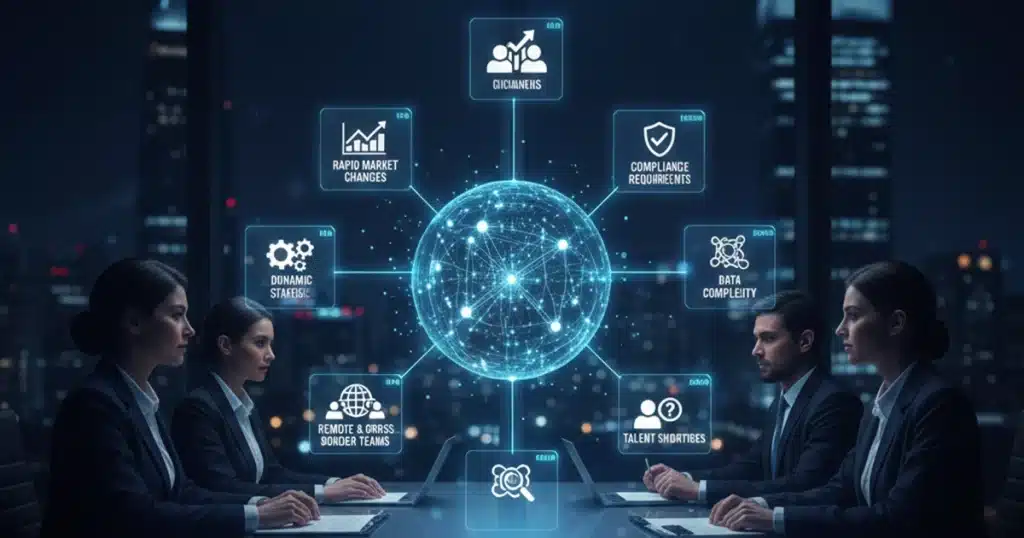
Workforce planning is no longer about spreadsheets, attendance logs, or yearly forecasts. Businesses must handle:
- Rapid market changes
- Dynamic staffing needs
- Remote and cross-border teams
- Compliance requirements
- Data complexity
- Talent shortages
An AI-powered HCM system allows HR teams to predict needs, automate decisions, and optimize workforce allocation with higher accuracy. Instead of reacting to staffing issues, companies can plan ahead strategically and intelligently.
How AI Transforms Workforce Planning
Below are the essential ways AI enhances modern workforce planning using advanced human resource technologies.
1. Predictive Analytics for Talent and Workforce Demand
AI models inside HR analytics software GCC and HCM analytics dashboards can forecast critical areas such as
- Future staffing needs
- Skill gaps
- Peak demand periods
- Expected turnover
- Workforce utilization
This allows HR leaders to make informed, proactive decisions.
Example: A construction company using workforce management software GCC can predict labor requirements for each project phase, improving scheduling and resource allocation.
2. Real-Time Workforce Tracking and Visibility
AI-enabled workforce tracking systems GCC offers real-time insights into:
- Attendance
- Location
- Productivity trends
- Overtime risks
- Understaffed areas
This level of visibility helps companies reduce operational inefficiencies and optimize shifts instantly.
3. Smarter Scheduling With AI Recommendations
Traditional scheduling is manual, time-consuming, and error-prone. AI improves it through intelligent recommendations based on:
- Employee skill sets
- Availability
- Workload
- Compliance rules
- Project timelines
With workforce scheduling software, businesses can auto-generate optimized rosters in minutes.
4. Enhanced Data Accuracy and HR Automation
AI minimizes human errors by automating tasks within:
- HR data management
- Time and attendance HCM GCC
- HR records management systems
- Integrated HR software GCC
This ensures consistent workforce data, which is crucial for accurate planning.
5. Improved Performance Insights
AI systems analyze employee trends to identify:
- High performers
- Skill strengths
- Engagement levels
- Training gaps
A platform that includes HCM with performance tracking and performance review HCM tools help companies align staffing decisions with talent readiness.
6. Workforce Cost Optimization
AI-driven models allow organizations to reduce HR expenses by:
- Eliminating unnecessary overtime
- Rightsizing teams
- Reducing hiring inefficiencies
- Optimizing salary structures
- Predicting budget requirements
With integrations across hr and payroll systems, GCC companies get a holistic view of labor expenditures.
7. Intelligent Talent Acquisition and Internal Mobility
AI enhances sourcing, screening, and onboarding through modules like
- Recruitment HCM solutions
- Talent acquisition systems
- Employee onboarding software GCC
By identifying the right candidates faster, AI reduces hiring costs and improves workforce planning accuracy.
8. Self-Service Tools Improve Workforce Empowerment
Platforms offering employee self-service HCM and self-service HR portals reduce admin workload and give employees faster access to:
- Attendance logs
- Shift schedules
- Leave balances
- Performance data
This transparency improves workforce engagement, an important factor in long-term planning.

Key Benefits of AI-Powered Workforce Planning
1. Higher Accuracy
AI identifies patterns humans often miss.
2. Faster Decision-Making
Real-time dashboards accelerate response times.
3. Better Compliance
AI ensures adherence to GCC labor regulations via GCC-compliant HCM systems.
4. Scalability
AI supports growing teams through scalable HCM software GCC.
5. Stronger Remote Workforce Support
AI aligns perfectly with HCM platforms for remote teams by providing real-time data anytime, anywhere.
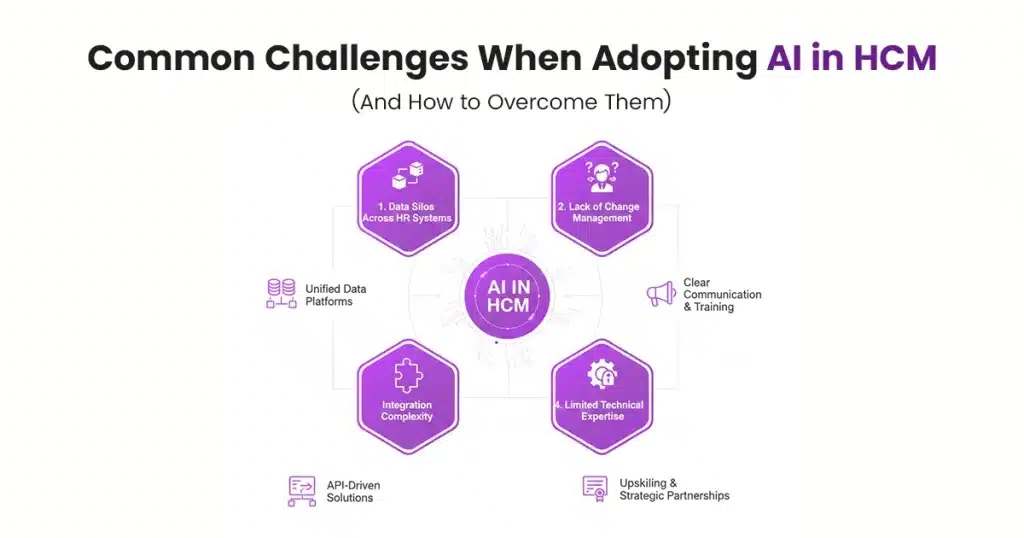
Common Challenges When Adopting AI in HCM (And How to Overcome Them)
1. Data Silos Across HR Systems
Many organizations still store HR data across multiple platforms, separate payroll systems, outdated spreadsheets, attendance devices, or different HR databases. When data is scattered, inconsistent, or outdated, AI cannot properly learn patterns or produce accurate forecasts. Poor data quality directly weakens the value of AI-driven planning.
Solution:
Shift to a cloud HCM platform GCC that centralizes all HR records in one place. Consolidating employee profiles, attendance logs, payroll details, and performance data ensures clean, structured information that AI can analyze effectively. Introducing standardized data practices and routine audits further improves accuracy.
2. Lack of Change Management
Even the best AI-powered HCM system can fail if employees and managers don’t understand how to use it. Teams may hesitate due to fear of automation, unfamiliarity with new features, or concerns about job security. HR leaders often underestimate how much mindset plays a role in digital transformation.
Solution:
Invest in change management from the start. Offer hands-on training, step-by-step demos, and role-based onboarding sessions. Communicate clearly how AI simplifies workload, not replaces people. Highlight long-term benefits such as reduced manual tasks, faster decisions, and improved accuracy to encourage adoption.
3. Integration Complexity
Many organizations still use legacy HR systems that weren’t designed to work with AI tools. When systems can’t share data, don’t connect seamlessly, or require heavy customization, the transition becomes time-consuming and costly. This slows down the entire digital HR journey.
Solution:
Choose modular HCM software built with open APIs and plug-and-play integrations. This ensures compatibility with payroll, attendance, ERP, recruitment, and other business platforms without complicated IT work. Modular systems allow companies to start small, integrate gradually, and scale when ready.
4. Limited Technical Expertise
HR teams often feel overwhelmed by AI-related dashboards, metrics, and prediction models. Without basic familiarity with HR analytics, companies may underutilize the system or misinterpret insights. This creates hesitation and reduces the value of AI adoption.
Solution:
Begin with user-friendly dashboards and guided workflows that simplify AI output. Modern platforms provide visual insights, automated recommendations, and pre-built reports—no technical skill required. Offer upskilling sessions to HR staff so they can confidently interpret workforce data and make informed decisions.
Tips for Choosing the Right AI -Powered HCM for Workforce Planning
- Look for Centralized HR Data
The best systems unify all workforce information—attendance, payroll, performance, shifts, and employee profiles—in one centralized database. This eliminates data duplication, improves accuracy, and helps AI deliver reliable predictions. A single source of truth is essential for effective workforce planning.
- Prioritize Automation
AI is most powerful when combined with strong automation capabilities. Look for HR automation software that handles workflows like leave approvals, shift requests, onboarding steps, and document updates automatically. Automation saves time, reduces errors, and allows HR teams to focus on strategic tasks.
- Ensure GCC Compliance
For companies in the GCC, compliance isn’t optional. Your HCM must support regional labor laws, payroll rules, WPS requirements, multi-country workflows, and localized calendars. AI-driven compliance monitoring minimizes risk and prevents costly penalties, especially in environments with strict workforce regulations.
- Select Modular Systems
A modular HCM lets companies pick only the features they need—talent management, scheduling, analytics, onboarding, or performance tracking—without paying for unnecessary tools. This approach offers scalability, cost efficiency, and flexibility as workforce needs evolve. You can start with core HR modules and gradually expand the system.
- Verify Analytics Strength
Workforce planning relies heavily on accurate insights. Choose a platform with a powerful HCM analytics dashboard that includes real-time metrics, forecasting tools, productivity indicators, labor cost analytics, and AI-driven recommendations. Strong analytics help leaders make smarter, data-backed decisions.
- Check Remote Workforce Support
With hybrid and remote work becoming the norm, your HCM must offer seamless cloud accessibility. A cloud-based platform ensures employees can check schedules, submit requests, log attendance, and access data from anywhere. Remote-friendly HCM systems improve collaboration and workforce visibility across locations.
Conclusion
AI-powered HCM systems have transformed how businesses plan, manage, and scale their teams. Whether you’re optimizing shift schedules, forecasting talent needs, or analyzing productivity trends, AI ensures faster, smarter, and more accurate decisions.
Organizations across Bahrain and the GCC are rapidly adopting these technologies as part of their digital HCM transformation, unlocking efficiency, cost savings, and long-term growth.
If your company is ready to elevate workforce planning, start by choosing a platform that combines AI intelligence with modular flexibility and strong analytics capabilities.
Ready to take your workforce planning to the next level? QuickHCM gives you an AI-powered, GCC-compliant platform built to help HR teams make faster, smarter, data-driven decisions. From predictive analytics to automated workflows, QuickHCM is the all-in-one HCM system designed for modern, remote, and growing organizations. Experience the future of HR with QuickHCM.
Book a Demo Today and Transform Your HR Operations.
FAQs
AI brings predictive forecasting, automation, and real-time analytics—not possible with basic HR tools.
Yes. AI uses data patterns to automate scheduling and improve attendance management accuracy.
Absolutely. Cloud-powered platforms provide real-time access for distributed and hybrid teams.
Yes. Self-service features, feedback tools, and performance analytics strengthen engagement.
It improves compliance, reduces HR workload, enhances planning accuracy, and supports large, diverse workforces.