
Payroll Management Module for GCC HRMS
Accurate, Compliant & Automated Payroll-Every Time
QuickHCM is a complete GCC-compliant HRMS solution with Payroll Management as a core module. It connects payroll with employee records, attendance, leave, salary components, WPS workflows, GOSI/SIO records, payslips, final settlement, and reporting across one integrated HCM platform.
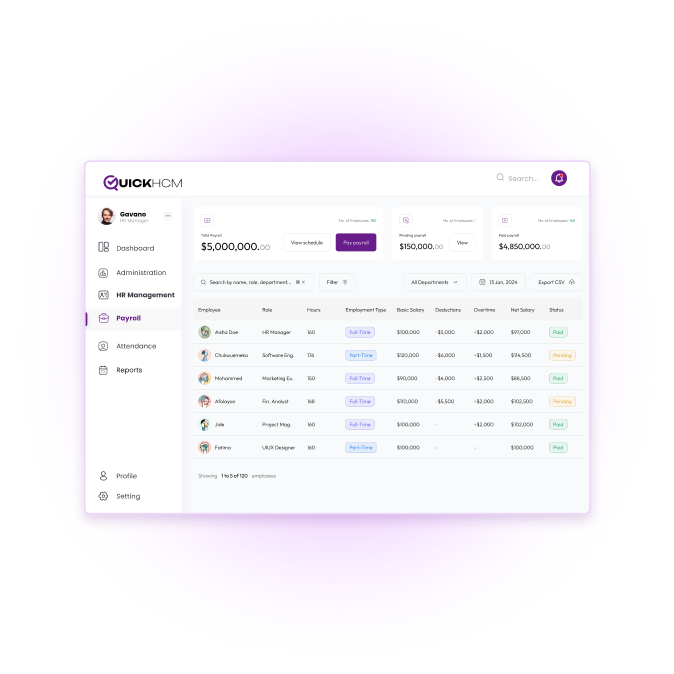
Key Features
QuickHCM Payroll Management supports payroll workflows as part of a complete GCC-compliant HRMS solution, helping HR and finance teams manage salary data, attendance inputs, leave records, compliance workflows, payslips, final settlement, and payroll reporting in one connected platform.

Structured Payroll Calculations
Manage gross salary, allowances, deductions, overtime, benefits, reimbursements, and final pay inputs through structured payroll rules connected with HR data.

GCC-Compliant Payroll Workflows
Support payroll workflows aligned with GCC compliance bodies and requirements, including WPS, LMRA, GOSI, and country-specific payroll records.

Payslip Generation & Employee Access
Generate detailed payslips and make payroll information accessible through the Employee Self-Service module, helping employees view salary details more easily.

Multi-Pay Structure Support
Manage different salary structures across departments, branches, entities, grades, contract types, and employee categories inside one payroll workflow.

Payroll Components Management
Configure earnings, deductions, allowances, bonuses, reimbursements, advances, loans, and other payroll components with flexible setup options.

Final Settlement & EOSB Workflows
Support final settlement and EOSB workflows using connected payroll, leave, deduction, advance, loan, and employee separation data.
- Reduce manual payroll work and recurring data entry
- Support GCC compliance workflows and audit-ready payroll records
- Connect HR and finance teams with structured payroll data
- Improve employee trust with timely, transparent payroll access
- Gain clearer visibility into payroll costs, deductions, and reports
Fully Integrated Across QuickHCM
- Syncs with Time & Attendance for overtime, absences, and attendance-linked payroll inputs
- Pulls from Leave Management, Salary Advances & Loans, and Employee Expense Management
- Connects with Employee Information Management for salary, contract, and employee records
- Pushes payroll data into Reports & Dashboard for cost tracking and workforce visibility
- Supports final settlement workflows through Employee Separation data
Make Every Payroll Cycle Effortless & Error-Free
QuickHCM helps HR and finance teams manage payroll as part of a complete HRMS solution, connecting employee records, attendance, leave, salary components, compliance workflows, payslips, final settlement, and reporting in one platform.

Payroll Management FAQs
Q1: What is QuickHCM Payroll Management
QuickHCM Payroll Management is a core module inside QuickHCM’s complete GCC-compliant HRMS solution. It helps HR and finance teams manage salary components, deductions, attendance-linked payroll inputs, leave data, payslips, WPS-related workflows, GOSI/SIO records, final settlement, and payroll reporting in one connected platform.
Q2: Is QuickHCM only payroll software?
No. QuickHCM is a complete HRMS and HCM solution for GCC businesses. Payroll Management is one of its major modules, connected with employee records, attendance, leave, employee self-service, salary advances, expenses, employee separation, reporting, recruitment, performance, and workforce planning.
Q3: Does QuickHCM support GCC payroll compliance?
Yes. QuickHCM is built as a GCC-compliant HRMS solution and supports payroll workflows aligned with key GCC compliance bodies and processes, including LMRA, WPS, GOSI, SIO, Mudad, and EOSB-related workflows across relevant GCC markets.
Q4: Can QuickHCM support Bahrain payroll workflows?
Yes. QuickHCM supports Bahrain payroll workflows, including salary components, employee records, attendance, leave, WPS-related workflows, SIO-related records, payslips, final settlement data, and payroll reporting as part of its complete HRMS platform.
Q5: Can QuickHCM support Saudi payroll workflows?
Yes. QuickHCM supports Saudi payroll workflows, including salary components, attendance, leave, GOSI-related records, WPS/Mudad-related payroll workflows, payslips, final settlement data, reporting, and connected HR records within one HRMS solution.
Q6: How does payroll connect with attendance and leave?
QuickHCM connects payroll with attendance and leave data so HR and finance teams can manage overtime, absences, unpaid leave, approved leave, late entries, and payroll-linked inputs with less manual data transfer between systems.
Q7: Can employees access payslips through QuickHCM?
Yes. QuickHCM can make payslips and payroll-related information available through the Employee Self-Service module. This helps employees view salary details more easily while reducing routine payroll and payslip requests for HR teams.
Q8: Does QuickHCM support final settlement and EOSB workflows?
Yes. QuickHCM supports final settlement and EOSB workflows by connecting payroll with employee records, leave balances, deductions, advances, loans, and employee separation data. This helps HR and finance teams manage exit-related payroll data in a structured way.
Q9: How can I book a QuickHCM payroll demo?
You can book a demo through the QuickHCM Contact Us page. The demo can show how Payroll Management works inside the complete QuickHCM HRMS platform, including payroll, attendance, leave, payslips, reporting, and compliance-related workflows.
Payroll Insights & Resources
Explore guides on GCC payroll, compliance workflows, salary structures, and connected HRMS payroll management.
What Are Salary Components in GCC Payroll? Salary components are

How Does Connected Payroll Reduce Manual HR Work? Connected payroll

What Should Saudi Payroll Software Manage? Payroll software in Saudi

Should You Choose Payroll Services or Payroll Software? Payroll services

Payroll software for GCC businesses should help HR and finance

Payroll software in Bahrain should help businesses manage salary data,