Turn HR Data into Decisions That Drive Growth
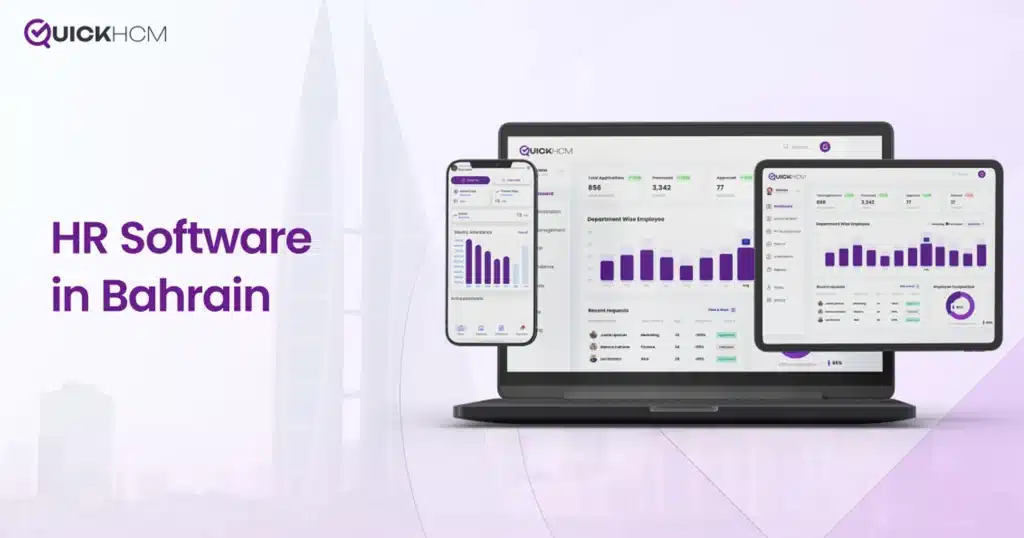
QuickHCM’s Reports & Dashboard module offers powerful, real-time analytics across all your HR functions. From workforce metrics to payroll summaries, you get instant access to the insights that matter—customized, visualized, and always up to date.
Key Features
Pre-Built Reports
Access ready-to-use reports for payroll, end-of-service benefits, attrition, overtime, absenteeism, performance reviews, and more.
KPI Tracking & Alerts
Monitor key HR indicators with threshold alerts for quick action on anomalies or performance drops.
Custom Report Builder
Create personalized reports using filters like department, location, designation, and employment type—no technical skills required.
Download & Export Options
Export reports in Excel, PDF, or CSV formats for management meetings, audits, or external sharing.
Role-Based Report Access
Restrict report visibility based on roles—HR, finance, department heads, or leadership.
Business Benefits
- Make informed decisions backed by real-time data
- Improve visibility across all HR operations
- Identify trends in workforce performance, costs, and turnover
- Prepare for audits and government inspections with confidence
- Strengthen collaboration between HR, finance, and leadership
Fully Integrated Across QuickHCM
- Pulls data from Payroll, Attendance, Leave, Recruitment, Performance, and Loans.
- Embedded in the admin dashboard for real-time workforce monitoring.
- Enables drill-down capabilities for each metric.
Get Clarity. Gain Control. Grow with Confidence.
With QuickHCM’s Reports & Dashboard module, your data becomes your competitive advantage.
FAQ's
Q1: What are HR reports and dashboards?
HR reports and dashboards are tools that provide insights into workforce data such as employee headcount, attendance, performance, and payroll. They present information in a structured and visual format, making it easier for organizations to monitor trends, track performance, and make informed decisions based on real-time data.
Q2: Why are HR analytics important for businesses?
HR analytics help organizations understand workforce trends and make better decisions. By analyzing data such as employee performance, attendance, and turnover, businesses can identify patterns, improve efficiency, and plan more effectively. This supports both operational and strategic decision-making.
Q3: What types of reports are included in HR systems?
HR systems typically include reports related to attendance, payroll, employee performance, leave management, and workforce trends. These reports can be customized based on business needs, allowing organizations to focus on specific metrics and gain relevant insights.
Q4: How do dashboards improve decision-making?
Dashboards provide real-time visibility into key HR metrics, allowing managers and leadership to monitor performance and identify issues quickly. By presenting data in an easy-to-understand format, dashboards help organizations make faster and more accurate decisions.
Q5: Can HR dashboards help track workforce costs?
Yes, HR dashboards can provide insights into workforce-related costs such as salaries, overtime, and benefits. By analyzing this data, organizations can monitor spending, identify cost trends, and manage budgets more effectively, supporting better financial planning.
Q6: Can managers access reports for their own teams?
Yes, most HR systems provide role-based access to reports and dashboards. Managers can view data related to their teams, while HR and leadership have access to broader organizational insights. This ensures data privacy while enabling better decision-making at different levels.
Q7: How do HR reports support compliance and documentation?
HR reports help maintain accurate records of workforce data, which supports internal policies and documentation requirements. Organized reporting ensures that information is available when needed and helps organizations maintain consistency in how data is tracked and reviewed.
Q8: How does QuickHCM provide reporting and dashboard capabilities?
QuickHCM offers real-time reporting and interactive dashboards that help organizations monitor workforce data and performance. It allows HR teams and managers to generate reports, track trends, and make informed decisions using centralized data from across all HR functions.
Q9: Can this solution support multi-country workforce management in the GCC?
Yes, the system is designed to support multi-country operations across the GCC by centralizing HR processes and maintaining consistency across locations. It helps organizations manage workforce operations while aligning with regional practices and structured compliance needs.
Insights & Resources
Stay Ahead with Expert HR Insights
For employers in Bahrain, salary processing is not only an
Managing payroll in Saudi Arabia requires accuracy, structure, and careful
As GCC businesses grow, compensation management becomes more complex. What
Many GCC businesses use payroll software, benefits spreadsheets, and separate
A professional services firm in Manama ran six separate systems
Imagine running a business in Bahrain where a compliance deadline