
Employee Records Management Software for GCC HRMS
Centralize, Secure, and Streamline Your Employee Records
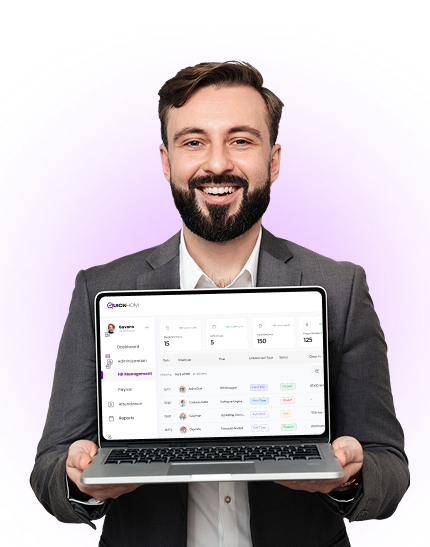
QuickHCM’s Employee Information Management module helps GCC HR teams centralize employee profiles, contracts, documents, dependents, job details, salary records, reporting lines, and lifecycle data inside one secure HRMS platform built for structured workforce management.

Key Features

Comprehensive Employee Profiles
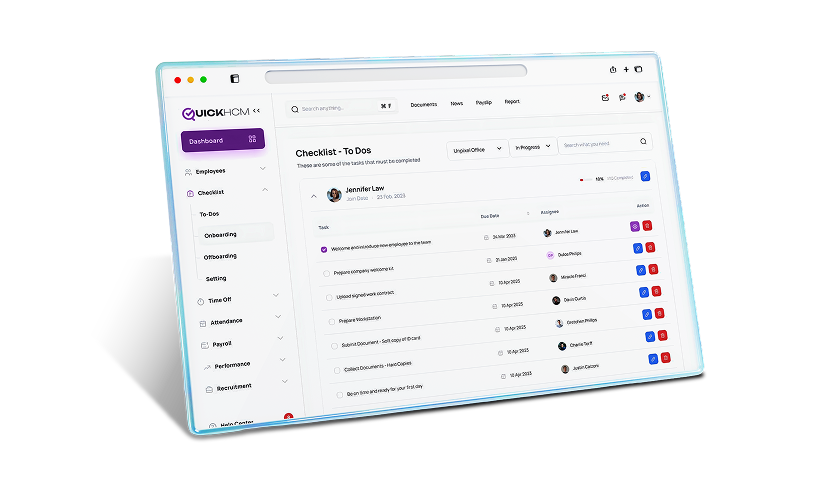
Store employee personal details, job information, dependents, emergency contacts, salary records, employment history, documents, and lifecycle data in one structured profile.

Organizational Structuring
Define departments, branches, designations, grades, reporting lines, cost centers, and business units to match your company’s workforce structure.

Document Upload &
Expiry Alerts
Upload and manage employee documents such as IDs, passports, visas, contracts, certificates, and letters with renewal reminders and expiry alerts.

Role-Based Access Control
Protect sensitive employee data by giving HR, managers, finance, and leadership teams access based on role, department, branch, or responsibility.

Audit Logs & Data History
Track changes to employee records, profile updates, document activity, approvals, and data history to improve transparency and record control.

Multi-Company & Multi-Branch Ready
Manage employee information across multiple companies, branches, departments, locations, and GCC entities while keeping records structured and accessible.
Benefits for the HR Teams
- Centralize employee records, documents, contracts, job details, and HR data in one secure HRMS module
- Reduce manual HR admin by replacing scattered spreadsheets, folders, emails, and disconnected employee files
- Improve employee data accuracy with structured profile fields, approvals, audit logs, and controlled updates
- Support Bahrain and GCC workforce operations with organized records for employees, dependents, documents, and job history
- Give HR, finance, managers, and leadership teams clearer access to the employee information they need
Enterprise-Grade Security & Fully Integrated Across QuickHCM
- All employee data is encrypted, backed up, and stored securely in compliance with data protection best practices
- Connects with Payroll Management so salary records, employee details, bank information, and job changes support payroll workflows
- Works with Employee Self-Service so employees can request profile updates and access approved HR information
- Links with Document Management to keep contracts, IDs, certificates, visas, and employee files organized
- Supports Leave Management and Time & Attendance by connecting employee profiles with leave balances, shifts, attendance records, and approvals
- Feeds Reports & Dashboard with structured employee data for headcount, department, branch, role, and workforce reporting
Ready to Organize Your Workforce Smarter?
QuickHCM helps HR teams centralize employee records, contracts, documents, job details, profile changes, reporting lines, salary information, and workforce data inside one connected GCC-focused HRMS platform.
Employee Records Management Software FAQs
Q1: What is employee records management software?
Employee records management software helps HR teams store, organize, update, and access employee information from one central system. It can include personal details, job information, contracts, documents, dependents, salary records, reporting lines, and employment history. In QuickHCM, Employee Information Management works as part of a complete GCC-focused HRMS platform, so employee data connects with payroll, leave, attendance, documents, ESS, reporting, and other HR workflows.
Q2: How does QuickHCM Employee Information Management help HR teams?
QuickHCM helps HR teams reduce scattered employee files, spreadsheets, email follow-ups, and manual record updates. HR can manage employee profiles, contracts, documents, job details, reporting lines, and lifecycle information from one secure module. This improves visibility, reduces repeated admin work, and helps teams maintain more structured employee data across departments, branches, and GCC locations.
Q3: What employee information can be stored in QuickHCM?
QuickHCM can store key employee information such as personal details, contact information, emergency contacts, dependents, job title, department, branch, designation, grade, reporting manager, salary details, contract information, documents, employment history, and lifecycle records. This gives HR teams a central employee database that supports payroll, attendance, leave, reporting, ESS, and document management workflows.
Q4: Can QuickHCM manage employee documents and expiry dates?
Yes. QuickHCM can help HR teams manage employee documents such as IDs, passports, visas, contracts, certificates, letters, and employment-related files. The system can support document organization, upload workflows, expiry tracking, and renewal reminders. This helps HR teams stay organized and reduces the risk of missing important document renewal timelines.
Q5: Does QuickHCM support role-based access to employee records?
Yes. QuickHCM supports role-based access so sensitive employee information can be viewed only by authorized users. HR, finance, managers, and leadership teams can have different levels of access based on their responsibilities. This helps protect employee data while still giving teams the information they need for payroll, approvals, reporting, and workforce management.
Q6: Can QuickHCM support multi-company or multi-branch employee records?
Yes. QuickHCM can support businesses managing employee records across multiple companies, branches, departments, and locations. This is useful for GCC businesses with regional operations, multi-entity structures, or distributed workforces. HR teams can manage employee data in a more consistent way while still allowing records to be filtered by branch, company, department, role, or location.
Q7: How does employee information connect with payroll?
Employee information connects with payroll by providing the core data payroll teams need, including employee identity, job role, salary details, bank information, department, grade, contract type, nationality, and effective-date changes. When Employee Information Management connects with Payroll Management, payroll teams can reduce repeated data entry and improve consistency between HR records and payroll processing.
Q8: How does employee information management support reporting?
Employee Information Management supports reporting by keeping employee records structured and searchable. HR and leadership teams can review headcount, department distribution, branch data, employee categories, job roles, reporting lines, document status, and workforce changes. When connected with Reports & Dashboard, employee data becomes easier to analyze for planning, compliance workflows, and management decisions.
Q9: Is QuickHCM Employee Information Management suitable for Bahrain and GCC businesses?
Yes. QuickHCM Employee Information Management is designed for GCC businesses that need structured employee records across Bahrain, Saudi Arabia, UAE, Kuwait, Qatar, Oman, and regional operations. It helps HR teams centralize employee data, documents, contracts, reporting lines, and workforce records while connecting this information with payroll, leave, attendance, ESS, documents, and reporting workflows.
Insights & Resources
Stay Ahead with Expert HR Insights

Employees do not lower their digital expectations when they arrive

In today’s digital-first business landscape, HR teams across Bahrain and

Workforce planning becomes difficult long before a company realizes it

Employee records tend to multiply quietly. A new hire joins

Growing a business often exposes weaknesses that smaller teams could
Saudi businesses are under constant pressure to make HR operations