Across the GCC, organizations are expanding faster than ever. New projects, diversified workforces, stricter compliance requirements, and rising expectations from employees have transformed how businesses operate. Yet, many companies still rely on outdated, fragmented, or manual HR processes to manage their workforce. These inefficiencies may appear manageable on the surface, but their cumulative impact on workforce management, compliance, and business performance is far more significant than most leaders realize.
HR inefficiencies are not just an HR problem. They directly affect operational continuity, payroll accuracy, employee engagement, leadership decision-making, and long-term scalability. For organizations operating in markets such as Bahrain, Saudi Arabia, and the United Arab Emirates, where labor regulations, workforce diversity, and compliance expectations are high, inefficient HR operations can quickly become a strategic risk.
Understanding HR Inefficiencies in the GCC Context
HR inefficiencies typically stem from disconnected systems, manual workflows, and limited workforce visibility. In many GCC organizations, HR teams still manage employee records, attendance, payroll inputs, and approvals using spreadsheets, emails, or multiple standalone tools.
While these methods may work at a small scale, they struggle to keep pace with GCC workforce realities, including:
- Multinational and multilingual employees
- Complex payroll and compliance requirements
- Project-based and shift-based workforces
- Rapid hiring and onboarding cycles
- Increasing demand for transparency and reporting
Without an integrated HR management platform, HR teams spend more time maintaining data than managing people.
How Manual HR Processes Disrupt Workforce Management
Manual HR processes may appear manageable in stable environments, but they struggle under the operational demands of modern GCC organizations. As workforce size and complexity increase, these processes introduce delays, inaccuracies, and visibility gaps that weaken workforce management at every level.
Fragmented Employee Data
One of the most immediate impacts of HR inefficiencies is fragmented employee data. When employee records are scattered across spreadsheets, emails, and separate systems, HR teams struggle to maintain accuracy and consistency.
This leads to:
- Duplicate or outdated employee records
- Errors in attendance and leave balances
- Inaccurate payroll inputs
- Delays in responding to audits or employee queries
Poor HR data management weakens the foundation of workforce management and increases operational risk.
Attendance, Scheduling, and Workforce Tracking Challenges
Workforce management software in the GCC must handle diverse working patterns, shift schedules, and attendance policies. Manual tracking systems often fail to provide real-time visibility into workforce availability.
Common issues include:
- Inaccurate time and attendance records
- Manual corrections before payroll runs
- Limited insight into absenteeism or overtime trends
- Scheduling conflicts across departments or projects
These inefficiencies directly affect productivity and cost control, especially in industries such as construction, healthcare, and services.
Payroll Errors and Compliance Exposure
Payroll accuracy is critical in the GCC, where payroll and compliance requirements vary by country and sector. Manual payroll preparation increases the likelihood of errors, late payments, and non-compliance.
HR inefficiencies often result in:
- Incorrect salary calculations
- Delayed payroll processing
- Compliance gaps with labor regulations
- Employee dissatisfaction and trust issues
Payroll errors do not just create administrative headaches. They undermine workforce confidence and expose organizations to financial and reputational risk.
The Hidden Cost of HR Inefficiencies on Business Operations
The impact of HR inefficiencies extends far beyond the HR department. When HR operations are slow or inaccurate, the entire organization feels the effect through reduced productivity, delayed decisions, and weakened employee engagement.
Reduced HR Productivity
When HR teams are consumed by repetitive administrative tasks, they have little capacity left for strategic initiatives. Manual approvals, document handling, and data reconciliation consume time that could be spent on workforce planning, engagement, or talent development. Over time, this reduces the overall effectiveness of the HR function and limits its ability to support business growth.
Slower Decision-Making
Leadership teams rely on accurate workforce data to make informed decisions. HR inefficiencies delay access to reliable insights, forcing leaders to operate with incomplete or outdated information.
This affects:
- Workforce planning
- Budget forecasting
- Hiring decisions
- Performance evaluations
Without real-time HR analytics, decision-making becomes reactive instead of strategic.
Employee Experience and Engagement Issues
Modern employees expect transparency, accessibility, and self-service. Inefficient HR systems make it difficult for employees to access pay slips, update personal details, apply for leave, or provide feedback.
This results in:
- Increased HR support requests
- Frustration among employees
- Lower engagement levels
- Reduced trust in HR processes
Employee engagement software and self-service HR portals play a critical role in addressing these challenges.
Why HR Inefficiencies Escalate as Organizations Grow
Growth amplifies existing weaknesses in HR operations. What may work for a small workforce quickly becomes a constraint as organizations expand across departments, locations, and regulatory environments.
- Scaling Workforce Complexity
As organizations expand across the GCC, workforce complexity increases. New departments, locations, and compliance requirements add pressure on HR operations. Without scalable HCM software, growth amplifies existing inefficiencies instead of resolving them.
- Increased Compliance Requirements
GCC labor laws, payroll regulations, and reporting requirements continue to evolve. Manual systems make it difficult to track regulatory changes and apply them consistently across the organization. HR compliance software built for the GCC helps mitigate these risks by standardizing processes and maintaining audit-ready records.
- Data Silos Across Departments
Disconnected HR systems create silos between HR, finance, and operations. This lack of integration leads to misaligned data, delayed approvals, and inconsistent reporting. Integrated HR software ensures that workforce data flows seamlessly across departments, improving coordination and accountability.
How QuickHCM Helps Eliminate HR Inefficiencies
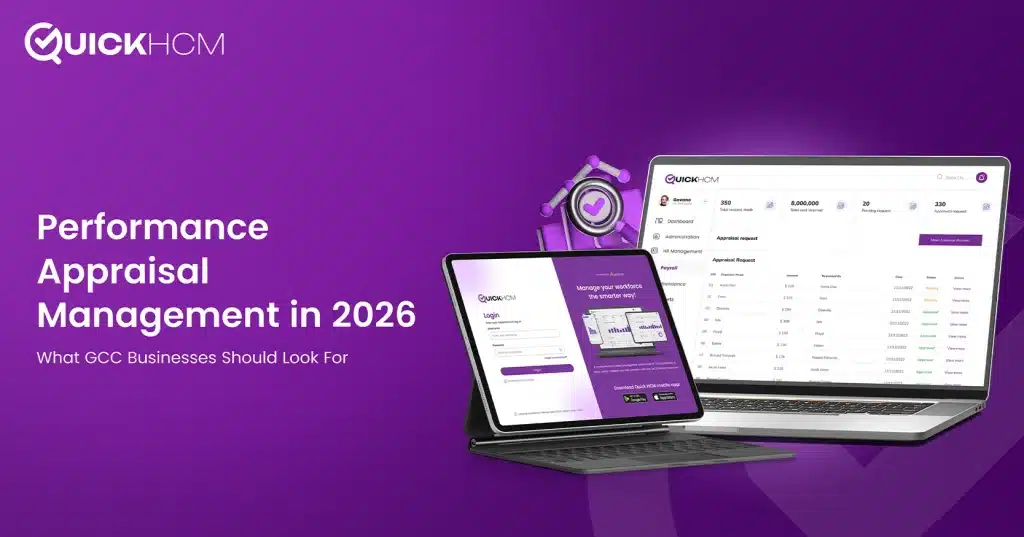
QuickHCM is designed to address the structural and operational challenges that cause HR inefficiencies in growing GCC organizations. It brings clarity, consistency, and scalability to workforce management through a unified and compliant HCM platform.
- Centralizing Workforce Management in One Platform
QuickHCM provides a centralized human capital management platform designed for GCC organizations managing complex and growing workforces. By bringing employee records, attendance, approvals, and HR documentation into a single system, it removes the fragmentation that often leads to data errors and operational delays. HR teams gain a consistent source of truth, enabling more reliable workforce management and smoother day-to-day operations.
- Reducing Manual Work Through HR Automation
Manual HR processes consume time and increase the risk of errors. QuickHCM streamlines core HR workflows through automation, including onboarding, attendance tracking, leave management, and document handling. This reduces repetitive administrative work, improves process consistency, and allows HR teams to focus on workforce planning and employee development rather than manual follow-ups.
- Supporting GCC Compliance and Bilingual Workforces
Workforce management in the GCC requires careful alignment with regional compliance requirements and multilingual environments. QuickHCM supports Arabic-English HR operations and configurable workflows that align with GCC labor practices. This helps organizations maintain compliance, ensure clarity in communication, and manage diverse teams across departments and locations with greater confidence.
- Improving Workforce Visibility With Real-Time Insights
QuickHCM includes built-in HR analytics and reporting tools that provide real-time visibility into workforce trends. HR leaders can monitor attendance patterns, workforce utilization, and performance indicators through centralized dashboards. These insights support better planning, faster decision-making, and proactive management of workforce challenges before they escalate.
- Enhancing Employee Experience Through Self-Service
Employee self-service is a critical component of modern workforce management. QuickHCM enables employees to access pay slips, update personal information, submit requests, and engage with HR processes independently. This reduces administrative dependency on HR teams, improves transparency, and contributes to higher levels of employee engagement and satisfaction.
- Enabling Scalable HR Operations for Growing Organizations
As organizations expand, HR systems must scale without increasing complexity. QuickHCM is designed as a modular and scalable HCM platform that adapts to organizational growth. Whether managing a small team or a multi-location workforce, the system supports expansion without introducing new inefficiencies or operational bottlenecks.
Conclusion
HR inefficiencies have a far-reaching impact on GCC workforce management, affecting productivity, compliance, employee experience, and leadership decision-making. What begins as a set of manual workarounds often escalates into operational risk as organizations grow.
Modern workforce management requires centralized systems, automation, and real-time insights. Human capital management software designed for the GCC enables organizations to move beyond reactive HR administration and build efficient, scalable, and compliant workforce operations.
For GCC businesses navigating growth, regulatory complexity, and workforce diversity, addressing HR inefficiencies is not optional. It is a strategic necessity.
Are you ready to eliminate HR inefficiencies and gain full control of your workforce?
Discover how QuickHCM helps GCC businesses centralize HR operations, improve compliance, and scale with confidence. Book a QuickHCM demo and see the difference in action.
FAQs
GCC businesses manage diverse, multilingual workforces and must comply with evolving labor and payroll regulations. Manual HR processes struggle to scale in this environment, increasing operational risk and limiting workforce visibility across departments and locations.
HR inefficiencies slow approvals, delay payroll processing, and reduce access to accurate workforce data. This impacts employee engagement, increases administrative workload, and prevents leadership teams from making timely, informed decisions.
Human capital management software centralizes employee data, automates HR workflows, and provides real-time workforce insights. This improves accuracy, compliance, and productivity while supporting scalable workforce management across GCC organizations.
Yes. Scalable and modular HR software is designed to support small and growing GCC businesses. Early adoption helps prevent operational bottlenecks, ensures compliance, and supports sustainable workforce growth.