In 2025, data is the new currency of decision-making and in the world of Human Resources, it’s transforming how organizations operate. HR is no longer about paperwork, attendance sheets, and manual reports; it’s about data-driven insights that shape workforce productivity, engagement, and performance.
That’s where HR dashboards come in. An HR dashboard is not just a visual reporting tool, it’s the command center for your HR strategy. By centralizing and visualizing workforce data, these dashboards empower HR teams and executives to make smarter, faster, and more strategic decisions. Whether it’s tracking turnover rates, monitoring payroll efficiency, or assessing employee engagement, HR dashboards provide real-time visibility that spreadsheets simply can’t.
For businesses in Bahrain and across the GCC, where digital transformation and compliance are top priorities, adopting powerful cloud-based HR analytics software is no longer optional; it’s essential.
Let’s explore the key benefits of HR dashboards and why every organization needs one to thrive in 2025.
What Is an HR Dashboard?
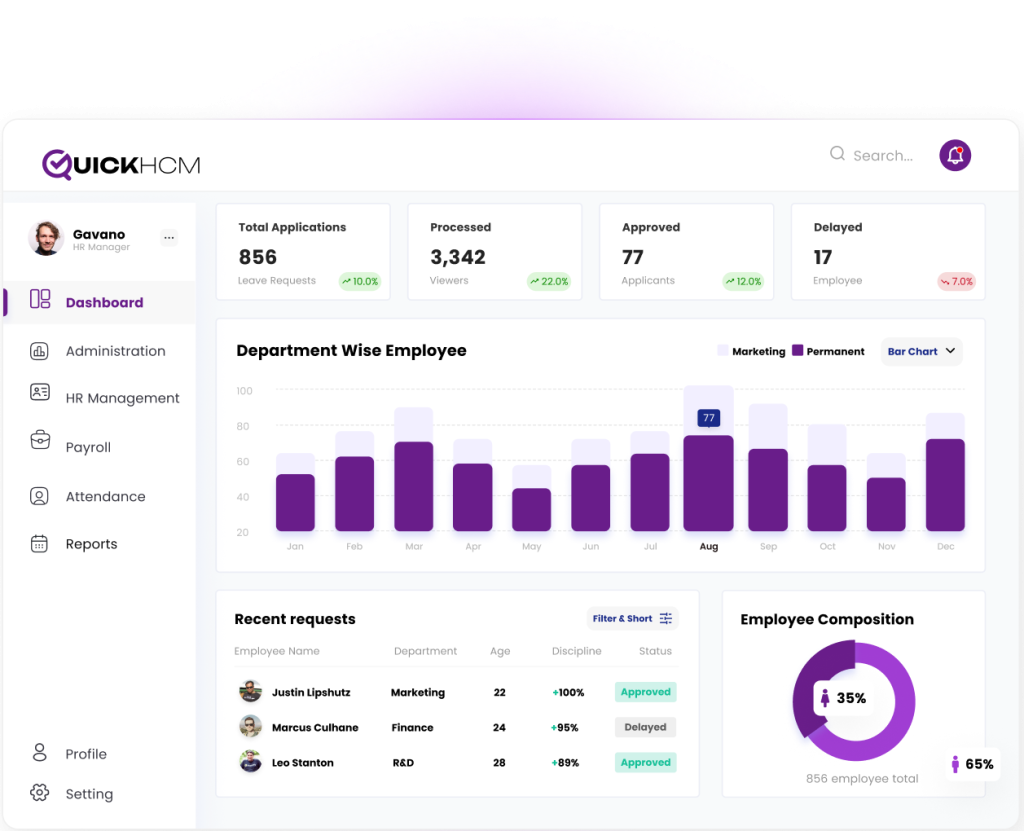
An HR dashboard is a digital reporting interface that collects, analyzes, and displays critical HR metrics in a visual format. It connects data from different HCM modules, such as payroll, attendance, performance, and recruitment, into one unified, easy-to-understand view.
Instead of combing through spreadsheets or disconnected systems, HR professionals can now access real-time workforce insights at a glance.
Modern HR analytics software GCC solutions like QuickHCM offer customizable dashboards designed to help HR teams identify trends, track KPIs, and make data-driven decisions. From workforce planning and recruitment performance to compliance tracking, every key HR function becomes measurable, visible, and actionable.
Why HR Dashboards Are Essential in 2025
The year 2025 represents a tipping point for HR digitalization. Businesses are dealing with distributed teams, hybrid work, and a new focus on employee experience. Manual HR reporting can’t keep up.
An HR dashboard provides clarity and control, enabling HR professionals to anticipate challenges, not just react to them.
Here’s why organizations are prioritizing HR dashboards and analytics platforms this year:
- Faster, data-backed decision-making
- Improved compliance tracking across GCC labor regulations
- AI-powered insights for workforce optimization
- Real-time analytics for agile HR planning
- Cross-department collaboration through transparent data
Top Benefits of HR Dashboards
1. Real-Time Data Visibility
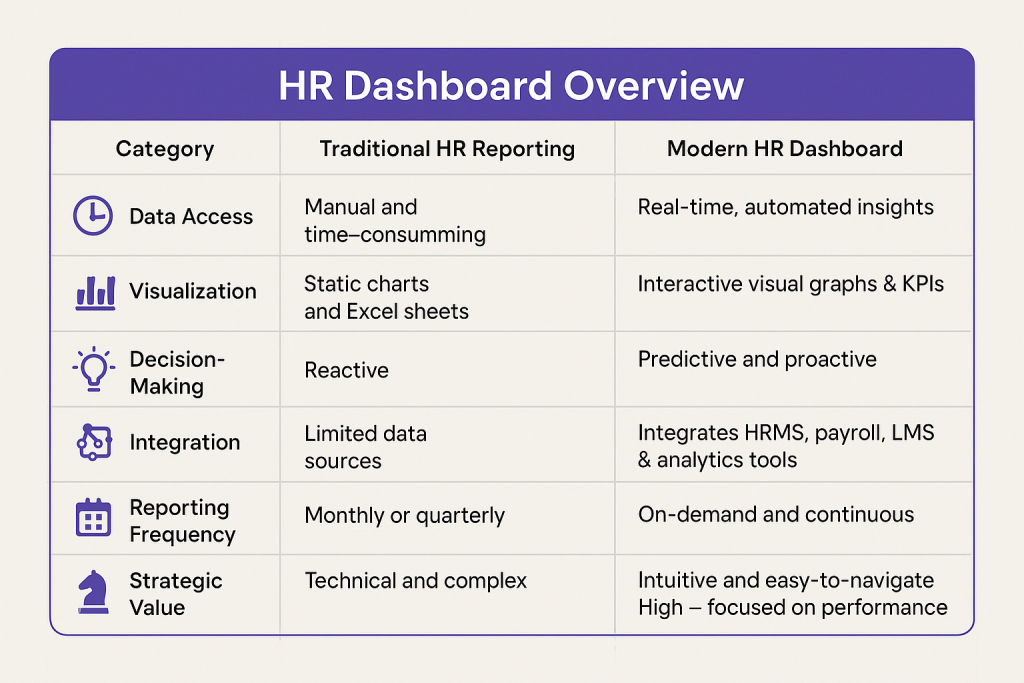
Gone are the days of waiting for monthly HR reports. With cloud-based HR dashboards, managers gain instant access to key workforce data, from attendance and productivity to leave trends and payroll summaries.
Real-time dashboards allow HR leaders to spot red flags immediately and take proactive actions to prevent issues like high absenteeism or turnover.
2. Smarter, Data-Driven Decisions
HR dashboards integrate data from multiple sources to present a single source of truth. This means decisions about recruitment, promotions, or performance appraisals are backed by evidence, not guesswork.
For instance, a GCC-compliant HCM system like QuickHCM can automatically calculate employee performance ratios, highlight top performers, and even recommend training interventions through AI-powered analytics.
3. Improved Employee Performance Tracking
Performance is at the heart of every organization’s success. HR dashboards simplify performance management by offering a visual breakdown of key indicators like goal completion rates, appraisal scores, and development progress.
By integrating performance review HCM tools, HR managers can compare team performance across departments and identify areas for coaching or recognition, building a culture of continuous improvement.
4. Enhanced Recruitment Insights
Recruitment analytics is another area where dashboards shine. A good recruitment HCM solution tracks hiring funnels, measures time-to-fill, evaluates candidate sources, and identifies bottlenecks in the hiring process.
This level of transparency allows HR professionals to refine recruitment strategies, allocate budgets efficiently, and ensure a seamless candidate experience critical for organizations across the GCC talent market.
5. Payroll and Compliance Monitoring
With evolving GCC labor laws and WPS requirements, HR dashboards help ensure every transaction and payroll process stays compliant.
Through an integrated payroll and HR software platform, HR leaders can view payroll accuracy, tax deductions, overtime costs, and compliance alerts, all from one dashboard.
This not only reduces errors but also strengthens trust and transparency between HR, finance, and employees.
6. Workforce Planning & Attendance Analytics
Workforce optimization depends on knowing how, when, and where your people work best. Time and attendance HCM dashboards visualize shift patterns, punctuality, and workforce productivity metrics.
These insights help HR managers identify understaffed departments, manage overtime costs, and forecast future workforce needs, which is especially useful for industries like construction, healthcare, and retail across the Gulf.
7. Better Employee Engagement
Engaged employees are productive employees. Dashboards that integrate employee engagement software GCC provide HR leaders with engagement scores, feedback trends, and survey responses, helping them act before disengagement becomes turnover.
By visualizing engagement data, HR teams can align initiatives with employee sentiment, creating a stronger organizational culture.
8. Predictive Analytics for Strategic HR
Modern HR dashboards leverage AI and predictive modeling to forecast trends such as turnover risks, training needs, or performance outcomes.
By analyzing historical data, HR professionals can prepare for future challenges, whether it’s anticipating seasonal hiring spikes or planning retention strategies for high performers.
9. Enhanced Collaboration Between Departments
Because HR dashboards are accessible across teams, they foster collaboration between HR, finance, and leadership. Executives can view workforce metrics in real time, ensuring decisions are aligned with company goals.
For example, the finance department can view compensation insights from the benefits administration system, while HR monitors workforce analytics, both using the same centralized data source.
10. Time and Cost Savings
Manual reporting is time-consuming and error-prone. HR dashboards automate data collection and visualization, saving countless hours for HR teams.
With a cloud-based HR platform like QuickHCM, organizations can cut down administrative overheads while gaining more accurate, actionable data insights.
Key Metrics Every HR Dashboard Should Track
To maximize value, an HR dashboard should monitor metrics that align with your strategic objectives. Common examples include:
- Employee turnover and retention rates
- Absenteeism and attendance trends
- Payroll accuracy and overtime costs
- Recruitment funnel metrics (applications, time-to-hire, source performance)
- Training completion rates and skill development progress
- Employee engagement and satisfaction scores
- Diversity and inclusion ratios
- Performance scores and goal achievements
These KPIs form the backbone of effective workforce analytics, driving continuous improvement across your HR ecosystem.
How HR Dashboards Support GCC Compliance
In the GCC region, HR compliance is critical. From labor laws to WPS-compliant payroll systems, dashboards play a vital role in maintaining transparency.
By integrating compliance tracking modules, HR dashboards automatically flag irregularities, generate audit-ready reports, and ensure all HR processes meet regional regulatory standards.
A GCC-compliant HCM system like QuickHCM ensures your HR operations stay both efficient and fully compliant: a must-have in today’s regulated business environment.
The Future of HR Dashboards in 2025
As organizations continue embracing digital HCM transformation, HR dashboards are evolving into intelligent, self-learning systems. Expect to see:
- AI-powered forecasting for workforce trends
- Natural language insights (AI-generated summaries for quick decision-making)
- Integration with employee wellness data
- Mobile-first HR dashboards for real-time monitoring
- Cross-platform analytics that connect HR, finance, and operations
The future of HR analytics is not just about data collection; it’s about strategic, proactive, and people-first decision-making.
Why QuickHCM Is the Smart Choice for HR Analytics in the GCC
QuickHCM’s HR analytics software GCC offers customizable dashboards that integrate seamlessly with your entire HCM suite; including core HR, payroll, recruitment, performance, and engagement modules.
With AI-powered analytics, GCC compliance, and bilingual Arabic-English support, QuickHCM empowers organizations to make informed, data-backed HR decisions.
Whether you’re a small business in Bahrain or a regional enterprise managing distributed teams, QuickHCM provides a scalable, secure, and intuitive analytics experience tailored to your workforce needs.
Conclusion
In 2025, success belongs to organizations that understand their people through data. HR dashboards turn raw numbers into meaningful insights, guiding leaders to make smarter, faster, and more strategic decisions.
By investing in an integrated cloud HCM platform with built-in HR dashboards, your HR team can move from reactive to proactive management; improving performance, engagement, and compliance all at once. Ready to visualize your workforce like never before? Explore QuickHCM; your complete solution for intelligent workforce reporting, data-driven decision-making, and a future-ready HR strategy.