In today’s evolving business environment, organizations across the GCC are moving beyond manual HR processes and disconnected systems. As workforces grow, regulations tighten, and employee expectations rise, the need for centralized, compliant, and scalable human capital management software becomes critical. At the heart of this transformation lies Core HR Management, the foundation upon which every successful HRMS and cloud HCM platform is built.
Core HR Management is not just about maintaining employee records. It is the operational backbone that supports compliance, automation, workforce visibility, and long-term HR maturity. For organizations in Bahrain and across the GCC, a robust Core HR system is often the first and most important step toward true digital HCM transformation.
What Is Core HR Management?
Core HR Management refers to the essential set of HR capabilities that manage employee data, documents, policies, and foundational HR workflows. It forms the base layer of any HR management software in Bahrain or cloud HRIS system in the GCC, ensuring that all employee information is accurate, accessible, and governed under a single platform.
Unlike fragmented tools or spreadsheets, a modern Core HR module within an integrated HR software GCC environment centralizes employee information and standardizes HR processes across the organization. This allows HR teams to move from administrative firefighting to strategic workforce planning.
In a broader HCM platform Bahrain context, Core HR enables seamless integration with payroll, workforce management, talent acquisition, analytics, and employee engagement systems.
Why Core HR Management Matters for GCC Organizations
Organizations operating in the GCC face unique workforce and compliance challenges. From labor law requirements to multinational workforces and bilingual operations, HR systems must be adaptable, secure, and regionally aligned.
A GCC compliant HCM system ensures that employee data, HR records, and documentation meet regulatory expectations while supporting internal governance. Core HR Management provides this compliance foundation by enforcing standardized processes, audit-ready documentation, and role-based access control.
Additionally, many businesses in Bahrain and the wider GCC region operate across multiple industries such as construction, healthcare, logistics, and professional services. A centralized Core HR solution helps ensure consistency across locations, departments, and workforce types while reducing operational risk.
Key Core HR Modules Powered by QuickHCM
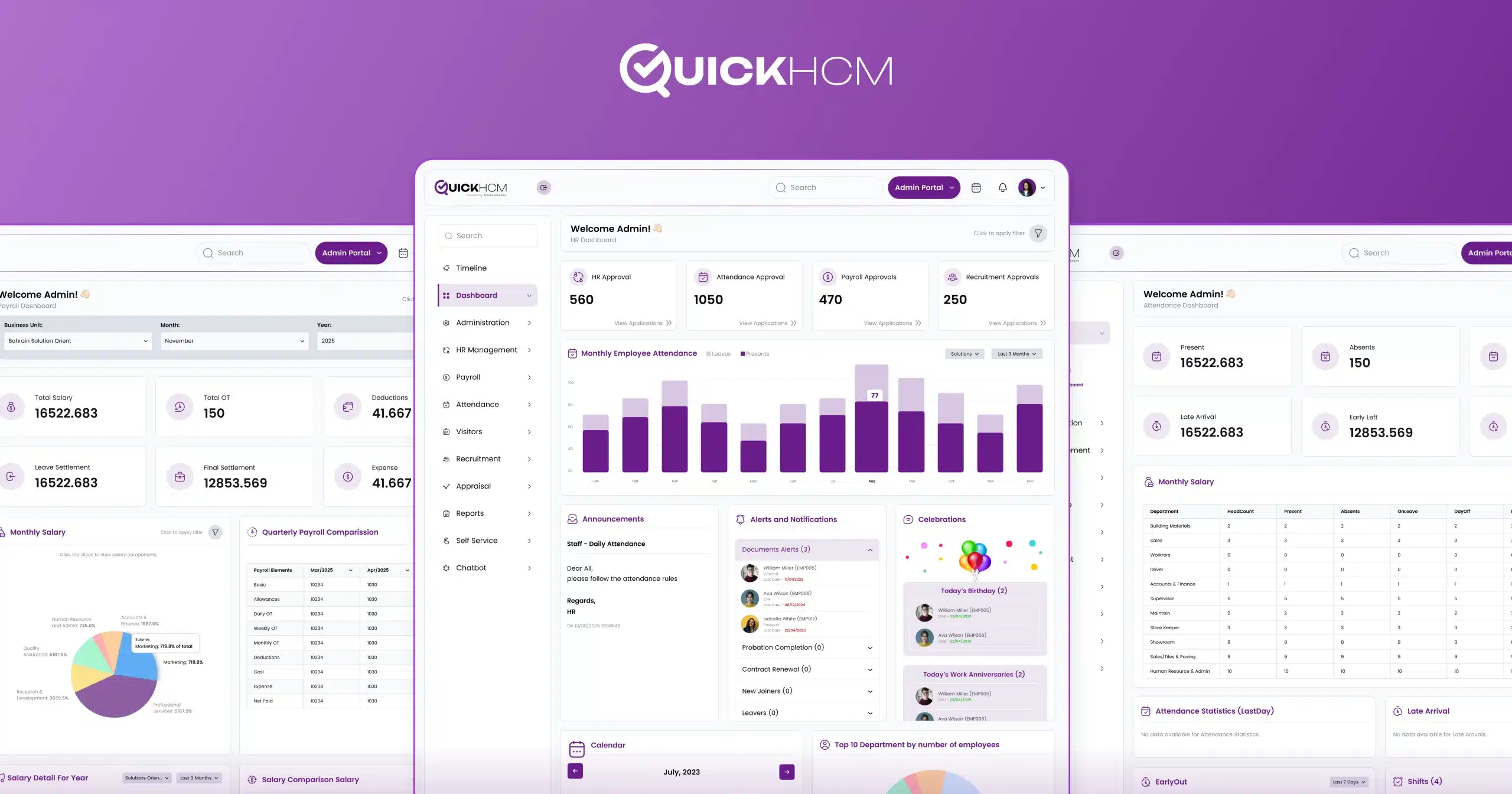
A comprehensive Core HR Management system within QuickHCM brings together several essential modules, each designed to streamline foundational HR operations, improve workforce visibility, and support compliance across Bahrain and the GCC.
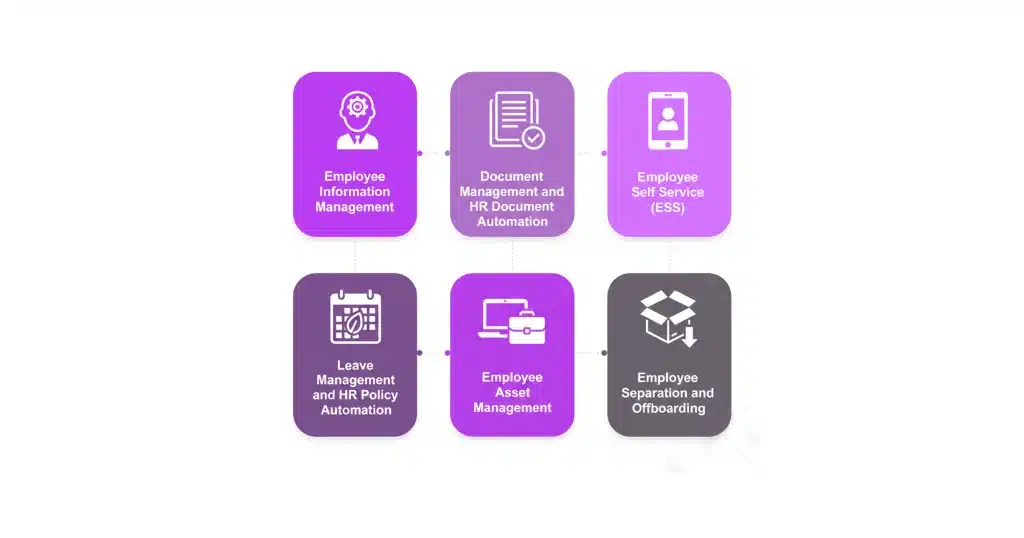
- Employee Information Management
Employee Information Management within QuickHCM serves as the centralized system of record for all employee data. It consolidates personal details, employment history, organizational structure, and role assignments into a single, secure platform.
For organizations seeking reliable HR data management in Bahrain, this approach eliminates data silos and ensures consistency across departments. HR teams gain real-time visibility into workforce composition, reporting structures, and employee lifecycle stages, enabling more informed decision-making.
Centralized employee records in QuickHCM also support smoother onboarding, internal transfers, promotions, and exits, while providing accurate data for payroll processing, performance tracking, and HR analytics software in the GCC.
- Document Management and HR Document Automation
QuickHCM includes built-in HR document automation to support secure, paperless document handling across the organization. Contracts, policies, certifications, and employee records are stored digitally and linked directly to employee profiles.
As a paperless HR solution in Bahrain, QuickHCM ensures documents are categorized, permission-controlled, and audit-ready at all times. This structured approach reduces compliance risk while improving operational efficiency.
Automated document workflows also minimize reliance on physical files and email-based approvals, helping HR teams maintain accuracy and respond more effectively during audits or internal reviews.
- Employee Self Service (ESS)
Employee Self Service in QuickHCM enables employees to access and manage their HR information through a centralized portal. This functionality is a core element of modern self-service HR software in Bahrain.
Employees can view personal details, download documents, access payslips, and submit requests without manual HR involvement. Support for an Arabic-English HCM system ensures accessibility for diverse GCC workforces.
By reducing routine HR queries, ESS improves operational efficiency while strengthening transparency and employee engagement.
- Leave Management and HR Policy Automation
Leave Management within QuickHCM allows organizations to define leave types, enforce policies, and automate approval workflows in line with HR automation software standards in the GCC.
Employees submit leave requests digitally, while managers gain real-time visibility into availability and balances. HR teams benefit from accurate leave tracking, automated accruals, and consistent policy enforcement aligned with local regulations.
This structured workflow ensures fairness, transparency, and continuity across the workforce.
- Employee Asset Management
Employee Asset Management in QuickHCM helps organizations track company-issued assets such as laptops, tools, and access credentials throughout the employee lifecycle.
Assets are linked to employee profiles, improving accountability and simplifying recovery during role changes or separation. This is particularly valuable for organizations using workforce management software in the GCC, where asset control and compliance are critical.
- Employee Separation and Offboarding
QuickHCM supports structured employee separation workflows as part of its end-to-end HR solution in Bahrain. Offboarding processes are standardized to ensure documentation, asset recovery, and access revocation are handled consistently.
By managing separations through a centralized system, organizations reduce operational risk, protect sensitive data, and maintain regulatory compliance during employee exits.
Core HR as the Backbone of a Modular HCM Platform
Core HR Management is not a standalone function. It acts as the foundation for a modular HCM software architecture, enabling seamless expansion into advanced HR capabilities.
Once Core HR is established, organizations can easily integrate:
- Payroll software in Bahrain
- Workforce management software GCC
- Recruitment HCM solutions
- Performance tracking and analytics modules
This modular approach allows businesses to scale their HR systems in line with growth, without replacing or disrupting existing processes. A scalable HCM software GCC ensures long-term value and adaptability.
Why Cloud-Based Core HR Is the Future
Cloud-based Core HR solutions are rapidly replacing on-premise systems across the GCC. A cloud-based HR management system in the GCC offers accessibility, security, and scalability that traditional systems cannot match.
Organizations benefit from real-time access, automatic updates, enhanced data security, and support for remote or distributed teams. Cloud deployment also prepares organizations for future capabilities such as AI powered HCM systems, advanced analytics, and predictive workforce insights.
For businesses pursuing long-term digital HCM transformation, cloud-based Core HR is no longer optional. It is essential.
Conclusion
Core HR Management is the foundation upon which modern HR operations are built. By centralizing employee data, automating documents, enabling self-service, and standardizing core workflows, organizations gain control, compliance, and clarity.
For businesses in Bahrain and across the GCC, investing in a robust Core HR system is the first step toward a fully integrated, scalable, and future-ready HR ecosystem. As part of an integrated HR software GCC strategy, Core HR empowers organizations to move beyond administration and toward strategic workforce excellence.
A strong Core HR foundation today enables smarter decisions, stronger compliance, and sustainable growth tomorrow.
FAQs
Core HR software centralizes employee data, automates workflows, and ensures compliance with Bahrain labor laws, improving HR efficiency and decision-making.
Cloud HR systems like QuickHCM offer secure, scalable, and accessible HR operations, supporting remote teams and future-ready HR capabilities across the GCC.
QuickHCM maintains accurate employee records, automates HR document workflows, and provides audit-ready, role-based access to meet regional compliance standards.
Yes. QuickHCM automates leave approvals, integrates with payroll, and offers a bilingual employee self-service portal to enhance efficiency and engagement.
By centralizing employee information and tracking performance, Core HR provides HR teams with actionable insights for strategic workforce planning and growth.
Absolutely. QuickHCM’s centralized, modular HR system supports multi-location operations, bilingual workforces, and consistent HR policies across the GCC.