
In an era where businesses are racing toward digital transformation, human resources functions can no longer remain manual and reactive. Organizations in the GCC and beyond are increasingly turning to AI-powered HCM systems to automate repetitive tasks, gain deeper workforce insights, and enhance productivity. According to global HR technology studies, organizations using AI in HR report up to 30–40% improvement in operational efficiency and significantly faster decision-making cycles.
By integrating human capital management software with intelligent automation, companies can move beyond basic HR administration to strategic workforce optimization, an essential requirement for sustainable and scalable growth.
This shift has positioned cloud HR platforms and AI-driven HCM solutions as pivotal tools for leadership teams seeking data-informed decisions, improved workforce planning, and measurable business outcomes. In this blog, we explore how these advanced systems elevate labor efficiency, support smarter decision-making, address implementation challenges, and deliver real ROI for modern organizations.
Understanding AI in Human Capital Management Systems
Before diving deeper, it’s important to understand what makes an HCM system truly “AI-powered.”
Traditional HCM software primarily handles operational HR tasks such as employee record management, payroll processing, attendance tracking, and compliance documentation. While essential, these systems rely heavily on manual inputs and static reporting.
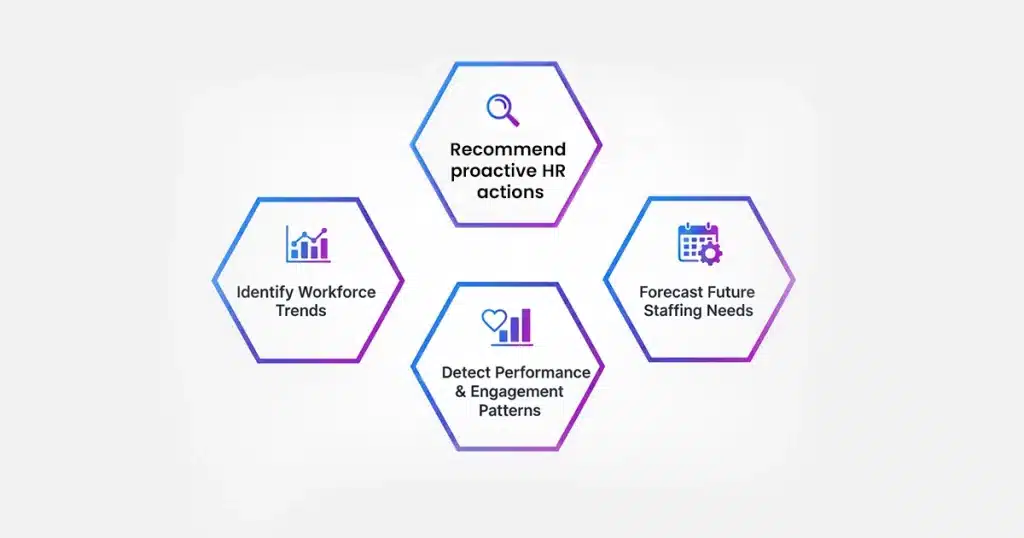
In contrast, AI-powered HCM systems leverage machine learning, automation, and predictive analytics to:
- Identify workforce trends
- Forecast future staffing needs
- Detect performance and engagement patterns
- Recommend proactive HR actions
This evolution transforms HR from a transactional support function into a strategic business partner that directly contributes to productivity, efficiency, and growth.
1. Enhancing Workforce Productivity Through Intelligent Automation
One of the most immediate benefits of AI-powered HCM systems is process automation. HR departments traditionally spend a significant portion of their time on administrative tasks; some studies estimate up to 60% of HR time is consumed by manual, repetitive work.
AI-powered automation streamlines:
- Data entry and employee record updates
- HR document automation and approvals
- Compliance checks and workflow routing
For example:
- Employee onboarding software can automatically trigger task assignments, document collection, and policy acknowledgments.
- HR document automation minimizes errors by using smart templates and validation logic.
- Core HR tasks within HR management software are updated in real time without manual intervention.
HR teams reclaim valuable time, reduce errors, and redirect focus toward workforce planning, engagement, and strategic initiatives that directly impact productivity.
2. Smarter Decision-Making with HR Analytics and Predictive Insights
AI’s ability to analyze large volumes of HR data is a game changer for decision-making. Unlike traditional reports, HR analytics software powered by AI delivers real-time, predictive insights.
AI-driven dashboards can:
- Predict turnover risks and staffing shortages
- Highlight performance patterns from performance review HCM tools
- Detect engagement gaps using employee feedback solutions
- Support workforce forecasting and capacity planning
Research indicates that organizations using predictive HR analytics experience:
- Up to 25% lower employee turnover
- More accurate workforce planning
- Improved leadership confidence in HR decisions
Instead of reacting to problems after they occur, HR leaders can take preventive, data-backed actions that protect productivity and reduce long-term costs.

3. Boosting Employee Engagement and Experience
Employee experience has become a major productivity driver. Studies consistently show that engaged employees are 17–20% more productive than disengaged ones.
AI-enabled employee self-service HCM platforms empower employees to:
- Request leave and manage schedules instantly
- Access payroll and compliance information in real time
- Update personal data without HR dependency
This self-sufficiency:
- Improves employee satisfaction
- Reduces HR service requests
- Creates faster response times across the organization
As engagement improves, organizations see higher retention, stronger performance, and greater overall workforce stability, amplifying the ROI of their HCM investment.
4. Driving Scalable HR Operations Across the Organization
Scalability is critical for organizations operating across Bahrain, the GCC, or multiple regions. AI-powered, cloud-based HR platforms are designed to grow with the business.
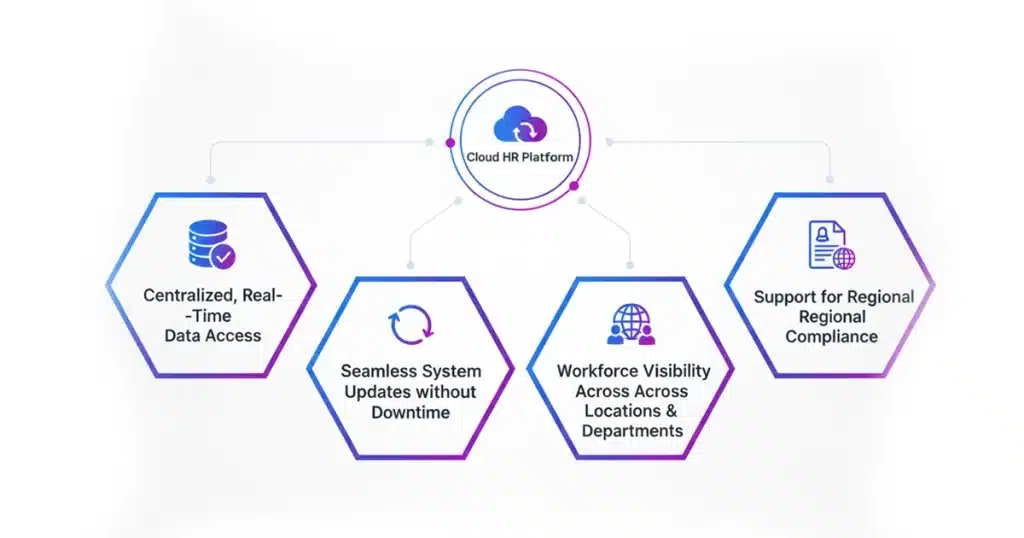
These systems enable:
- Centralized, real-time data access
- Seamless system updates without downtime
- Workforce visibility across locations and departments
- Support for regional compliance through GCC-compliant HCM systems
For businesses expanding operations or managing hybrid and remote teams, scalable HCM systems ensure consistency, control, and operational efficiency without increasing administrative overhead.
5. Reducing Bias and Improving Fairness in HR Decisions
AI can play a critical role in improving consistency and fairness in HR processes when implemented responsibly.
For example:
- Recruitment HCM solutions use AI to shortlist candidates based on predefined criteria
- AI-driven performance analytics standardize evaluations across teams
Research shows that structured, data-driven assessments can reduce subjective bias by 20–30% compared to manual evaluations. While AI does not replace human judgment, it provides a more objective foundation for decisions related to hiring, promotions, and performance reviews.
6. Challenges of Implementing AI-Powered HCM Systems
Despite the benefits, adopting AI-powered HCM systems comes with challenges that organizations must address strategically:
- Data Quality and Bias Risks: AI systems are only as effective as the data they analyze. Incomplete or biased data can lead to inaccurate insights if not governed properly.
- Change Management and Adoption: Employees and HR teams may resist new systems due to unfamiliarity. Without proper training and leadership support, adoption can slow ROI realization.
- Integration with Legacy Systems: Integrating AI-driven HCM platforms with existing HR, payroll, or finance systems requires careful planning and technical expertise.
- Data Privacy and Compliance: AI-driven HR platforms manage sensitive employee data, making robust security, access control, and compliance measures essential, especially in regulated GCC environments.
Organizations that address these challenges early achieve smoother transitions and stronger long-term outcomes.
Conclusion
AI-powered HCM systems represent far more than a technological upgrade; they are a strategic investment in workforce productivity, decision-making, and business growth.
By automating repetitive tasks, delivering predictive insights, enhancing employee experience, and enabling scalable operations, these systems elevate HR into a core driver of organizational performance.
For companies in Bahrain and across the GCC, adopting AI-powered HCM solutions is no longer optional; it’s a competitive necessity for organizations that want to grow efficiently. retain talent, and lead with confidence in a data-driven economy. Are you ready to evolve your HR strategy? It’s time to unlock true workforce potential with QuickHCM’s AI-powered HCM platform, a scalable, cloud-based solution designed to help organizations improve productivity, make smarter decisions, and achieve measurable ROI. Explore QuickHCM today and see how intelligent HR technology can power your next phase of growth.
FAQS
AI-powered HCM software improves productivity by automating repetitive HR tasks, streamlining workflows, reducing manual errors, and enabling faster HR service delivery. This allows HR teams and employees to focus on higher-value, strategic work.
Yes. Modern cloud HCM platforms for GCC companies are designed to support regional compliance, multilingual workforces, and scalable operations, making them ideal for organizations in Bahrain and across GCC countries.
Organizations using AI-driven HCM systems often see reduced administrative costs, improved employee retention, faster hiring cycles, and better workforce planning, leading to measurable ROI through increased efficiency and productivity.
AI enhances decision-making by analyzing large volumes of HR data to identify trends, predict risks like attrition, and recommend proactive actions. This shifts HR decisions from intuition-based to data-driven and strategic.