A lot has happened in the field of human resources during the past few years. People no longer perceive managing people as an administrative chore. Human resources are very important for attracting and keeping the best people, growing businesses, and improving overall performance.
In today’s data-driven era, HR analytics software plays a crucial role in this transformation. More and more businesses are using HR analytics software to gather, process, and understand data from employees in order to make better decisions. Analytics have helped HR departments look at patterns, guess how many staff members they will need, and come up with plans that are in line with their goals, instead of relying on gut feelings or old ways of evaluating things.
By 2025, HR analytics Software will have become the most important tool for making HR plans that will last over time, even more important than competitive advantage.
1. Understanding HR Analytics Software Human Resource Analytics
Human resource analytics software can help you understand data about human resources better. These platforms connect to many different HR systems and give you insights that help you make better decisions and do better work.
Analytics software looks at HR initiatives in a different way than more traditional HR management systems. It looks at both the short-term and long-term effects of the projects. The goal for businesses is to figure out what they are doing wrong and how to keep their employees interested and productive.
Think of software that looks at HR. Keeping track of payroll and attendance is just the beginning. It might highlight patterns of absence, link them to job happiness, and even suggest ways to boost morale.
2. The Change from Reports to Predictions in HR Analytics
A lot has happened in the field of human resources analytics over the years. In the past, human resources departments had to rely on hard and sometimes wrong manual spreadsheets and little reporting. Cloud-based HR platforms have made it possible for HR departments to get accurate, up-to-date information about their employees through automation.
Thanks to the rise of AI and ML, human resource analytics now focuses less on looking at what has happened in the past and more on predicting what will happen in the future and coming up with solutions. HR departments can now predict when employees will leave, find talent gaps, and make decisions that will help the company make more money.
3. A Quick Look at Software for HR Analytics
The four main steps in making software for human resource analytics are collecting, integrating, analysing, and visualising data using modular HCM software.
- The program uses a number of systems to gather data. These are payroll systems, tools for managing performance, platforms for hiring, and HRIS.
- To make sure that all the data is correct and consistent, it needs to be brought together from many different places into one platform.
- The system uses algorithms and AI models to look for patterns, relationships, and insights in the data.
- Using data visualisation tools like interactive dashboards and HCM analytics dashboards helps human resources workers make better decisions.
With this data-driven method, human resources departments can stop relying on gut feelings and start using strategies based on facts.
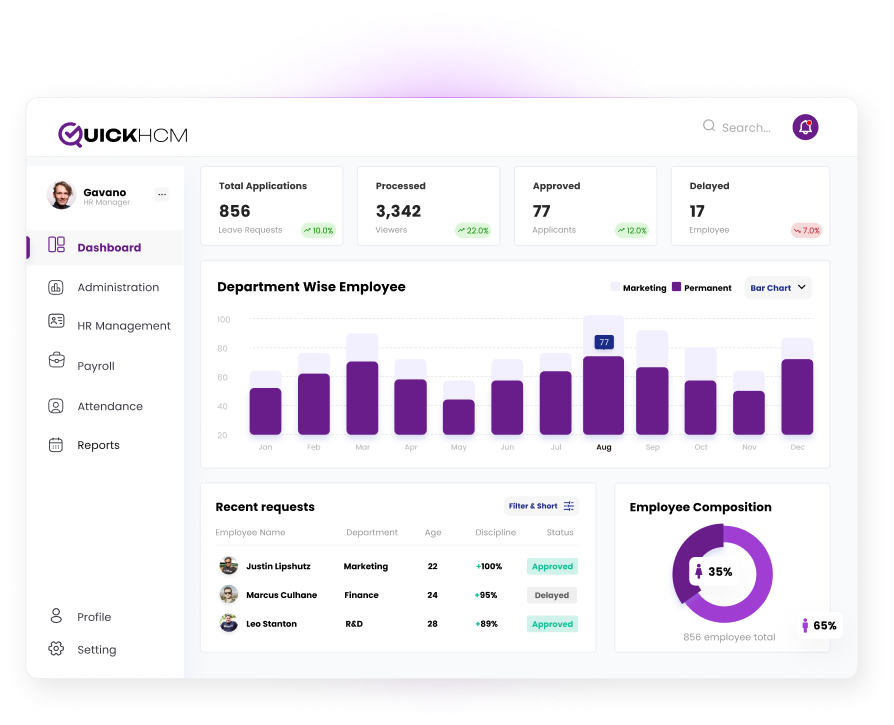
4. What Makes an HR Analytics System Cutting-Edge
Today’s HR analytics systems have a lot of powerful tools that help with every part of managing a staff, such as:
- Planning and forecasting the workforce – figuring out when a firm will need to hire more people and making sure that hiring efforts are in line with the organisation’s strategic goals.
- Key performance indicators (KPIs) that workers can use to keep track of their own and their team’s progress through performance review HCM tools.
- Employee attrition and retention tracking to find trends in turnover and high-risk employees.
- Diversity and inclusion reporting to evaluate fairness and representation across departments.
- Pay equity analysis to ensure salary structures are compliant and fair.
- Talent acquisition analytics to make recruiting and hiring more efficient.
- Employee engagement and sentiment research using surveys and feedback methods.
These upgrades have made it easy for HR departments to make strategic choices without hurting the experience of employees.
5. Why AI is Important for HR Analytics
Artificial intelligence (AI) is transforming the way we analyse human resources by getting rid of mistakes, making things more accurate, and showing us things we didn’t know before.
Machine learning algorithms can look at prior data to predict how many employees will leave or uncover people who have a lot of potential to do well. AI-powered chatbots can boost engagement by answering HR enquiries and getting feedback right away.
AI also makes projections more accurate, which means that employers can be more sure about changes in the workforce. For HR practices to maintain their integrity and comply with rules, it is imperative to deploy AI in a transparent and fair manner.
6. Reasons to Spend Money on HR Analytics in 2025
More and more businesses want to boost morale and productivity by making decisions based on data. By 2025, HR tech will have reached a critical mass.
There are a number of reasons why businesses are buying HR analytics software:
- Using analytics to keep track of how engaged and productive distant coworkers are is a crucial aspect of hybrid work setups.
- Data insights make it easy to be open about pay and performance appraisals, which helps meet compliance obligations.
- Using predictive analytics in hiring and keeping employees leads to fewer employees leaving and better hiring processes.
- Data that shows a direct link between employee productivity and company goals can help align human resources and business strategy.
In short, HR analytics has gone from being a back-office job to becoming a crucial differentiator in today’s business world through cloud-based HR platforms.
7. Significant Benefits of Utilizing HR Analytics Tools
Using human resource analytics software might completely change the way a company manages its workers.
- Improving Decision-Making Skills: Using data-driven insights, human resource managers can stop guessing and start acting on real patterns and facts.
- More Resilience to Let Go: You may stop employees from resigning by acting immediately when analytics show that they are unhappy or burned out.
- More Diversity and Inclusion: Using statistics to keep an eye on things like representation, income equality, and promotion rates can help make the workplace fairer.
- Getting the Most Out of ROI: Using analytics to find areas where training or hiring could be more effective can help organizations get the most out of their HR budgets.
- Making the Most of Your Work Hours: HR needs to keep an eye on engagement and wellness data in order to design programs that improve job satisfaction and performance.
8. Where to Find Data for HR Analytics
Human resources analytics collect data from all around the company. Common sources include:
- HRIS – employee records, benefits, and attendance
- Payroll Software – salaries, bonuses, and overtime
- ATS (Applicant Tracking System) – recruiting performance data
- LMS (Learning Management System) – training participation and completion
- Engagement Platforms – surveys, comments, and sentiment data
After combining data from several sources, HR experts may better connect people metrics to corporate goals.
9. Trouble with HR Analytics Software
There are numerous clear benefits to using HR analytics software, but there are also certain problems that come with it:
- Data protection compliance to safeguard employee privacy
- Integration difficulties with legacy HR systems
- Lack of analytical skills within HR teams
- Data reliability issues that could distort outcomes
We can get through these problems if we prepare, work together, and are committed to learning.
10. How to Choose the Best HR Analytics Software
Choosing the right software is critical. Before deciding:
- Set clear goals (e.g., reduce turnover, streamline hiring)
- Ensure scalability to grow with the firm
- Check integration compatibility with existing HR and ERP systems
- Look for user-friendly dashboards
- Verify vendor compliance with data protection laws
Some common HR analytics solutions include Workday, ADP DataCloud, Oracle HCM Cloud, and SAP SuccessFactors.
11. How to Use HR Analytics
Before using HR analytics, plan carefully:
- Set objectives (e.g., improving transparency, reducing turnover)
- Run pilot projects in select departments
- Clean and validate existing HR data
- Train HR professionals to interpret insights
- Adjust strategies as company needs evolve
A well-organized installation ensures long-term success.
Conclusion
The future of Human Resources is not just about managing people, it’s about empowering them with data-driven insight, strategic foresight, and responsive systems. As organizations seek to become more agile, resilient, and people-centric, HR analytics software becomes a foundational tool in turning raw data into real impact.
If you’re ready to transform HR from reactive to proactive, QuickHCM is here to help. Our platform combines robust analytics, seamless integrations, and an intuitive interface to help HR teams unlock insights that drive retention, efficiency, and growth.
Visit QuickHCM now to request a demo, explore features, and discover how we can help you build a future-ready HR function today.
Frequently Asked Questions
HRIS stores employee data; analytics software interprets it for insights.
Yes, SaaS models offer affordable tiers.
Not necessarily modern tools are user-friendly.