In 2025, HR is no longer just about payroll and record-keeping; it’s about creating adaptive, data-driven, and people-centered workplaces. Companies across the GCC, MENA, and beyond are rapidly shifting from traditional, monolithic HR systems to Modular HCM software, platforms that allow organizations to pick and deploy only the HR modules they need, when they need them.
This shift isn’t just a technology upgrade; it’s a strategic move to build agility, scalability, cost efficiency, and better employee experiences.
Below are the top 10 reasons companies are making the switch in 2025 and why modular HCM is quickly becoming the standard for modern HR teams.
1. Pay-As-You-Grow Scalability
Modular HCM systems let companies start small and expand their HR capabilities over time.
Instead of being forced into a massive system from day one, businesses can add modules (Payroll, Attendance, Performance, Recruitment, etc.) only when needed.
Why it matters
- Ideal for scaling businesses
- No overpaying for unused features
- Faster deployment
2. Faster Implementation & Lower Deployment Effort
Traditional HCM systems can take months to set up. On the other side, have you thought about modular HCM? It’s just a game of weeks or even days. Because companies deploy modules independently, each component is easier to configure and integrate.
Benefits
- Minimal disruption to daily HR operations
- Quicker user adoption
- Faster ROI
3. Reduced Total Cost of Ownership (TCO)
Organizations no longer want bulky systems with heavy licensing fees. With modular HCM, businesses only pay for what they use.
Cost savings come from
- No unnecessary modules
- Lower customization and maintenance costs
- Cloud hosting eliminates hardware expenses

4. Greater Flexibility for Hybrid & Remote Teams
As remote work becomes the norm in 2025, HR needs highly flexible digital systems. Modular HCM platforms allow companies to deploy remote-friendly modules like
- Online attendance
- Digital onboarding
- Self-service portals
- Cloud payroll
- Shift scheduling
- Virtual performance reviews
Employees can access everything from anywhere, securely.
5. Customize HR Workflows Without Coding
Companies need systems that adapt to them, not the other way around. Modular HCM platforms offer customizable workflows, forms, and automation rules.
Why companies love it
- HR teams can configure processes independently
- No developer dependency
- Faster process optimization
6. Clean System Architecture & Better Performance
Monolithic systems are slow, bloated, and rigid. While modular HCM equals clean architecture, modular codebase, and independent components.
Results
- Faster system response
- Better uptime
- Fewer system conflicts
- Easier product updates

7. Stronger Compliance Alignment (Especially in GCC)
Regulations across the GCC continue to evolve, including labor laws, expat regulations, WPS compliance, etc. Modular HCM systems allow HR teams to activate only the compliance modules relevant to their region.
Key compliance benefits
- Auto-updated local laws
- Automated payroll compliance
- Audit-ready reporting
8. Future-Proof Design With AI & Automation
Many companies switch to modular HCM because it integrates seamlessly with emerging HR tech, especially AI:
- Predictive analytics
- Resume screening automation
- Sentiment analysis
- Performance prediction
- Skill gap analysis
This flexibility keeps HR teams future-ready without rebuilding their entire system.

9. Better Employee Experience Through Self-Service
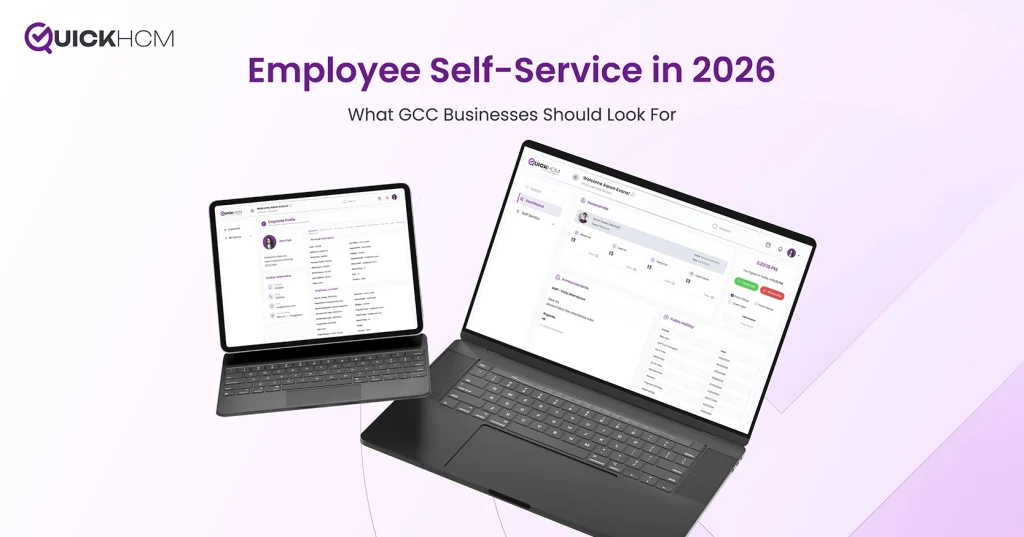
Modern employees expect fast access to HR services. Modular HCM platforms include ESS (Employee Self-Service) features such as
- Leave requests
- Documents
- Payslips
- Attendance logs
- Profile updates
And you know what results you will get: Fewer HR bottlenecks and more empowered employees.
10. Easier Integration With Existing Tools
Modular systems integrate effortlessly with:
- ERPs
- Finance systems
- Accounting tools
- Biometric devices
- CRM platforms
- Learning systems
This makes modular HCM ideal for companies upgrading gradually instead of replacing everything at once.

Common Challenges When Switching to Modular HCM (And Smart Ways to Avoid Them)
1. Resistance to Change: “Why Do We Need a New System?”
It’s natural for employees to feel unsure or uncomfortable when a new HCM platform replaces the old, familiar one. People worry about learning curves, losing data, or simply changing routines.
Smart Tip: Offer hands-on training, simple video demos, and a friendly onboarding plan. When teams understand why the new system helps them, adoption becomes faster and smoother.
2. Data Migration Problems: Moving Years of HR Data Isn’t Easy
Switching to a new HCM means moving employee records, payroll history, documents, attendance logs, and more. Messy, outdated, or inconsistent data can make migration slow and error-prone.
Smart Tip: Clean your HR data first. Remove duplicates, fix errors, and then migrate in phases (start with core HR, then payroll, then attendance). This reduces risk and ensures accuracy.
3. Choosing the Wrong Modules: Paying for What You Don’t Need
Modular HCM is powerful but only if you select the right modules. Many companies overbuy because they’re unsure what they need, leading to wasted budget and unnecessary complexity.
Smart Tip: Begin with essential modules like Core HR, Payroll, and Time & Attendance. Add more (Talent, Performance, Engagement) only when needed. Let the system grow with your business.
4. Vendor Lock-In: Getting Stuck With a System That Can’t Grow
Some HCM vendors lock businesses into rigid systems, limited integrations, and costly upgrades. This stops you from customizing workflows or scaling as your team grows.
Smart Tip: Choose a modular HCM with open APIs, easy third-party integrations, transparent pricing, and flexible contracts. You should be able to plug in new modules without switching platforms.
Conclusion
The shift to modular HCM software in 2025 is happening for one major reason: businesses want HR technology that grows with them, not against them.
Modular systems offer scalability, remote-friendly tools, compliance support, cost savings, faster deployment, better performance, and AI-driven innovation. If your organization wants an HCM system designed for the future, modular is the way to go.
Ready to upgrade to a smarter, scalable HCM system? Request a demo with QuickHCM today and see how fast you can transform your HR workflows.
FAQs
Yes, because you only pay for the modules you use.
Absolutely. Most systems offer cloud access, ESS portals, digital onboarding, attendance tracking, and remote payroll management.
Between a few days and a few weeks, depending on the modules selected.
Yes, expansion is one of the biggest advantages of modular HCM.