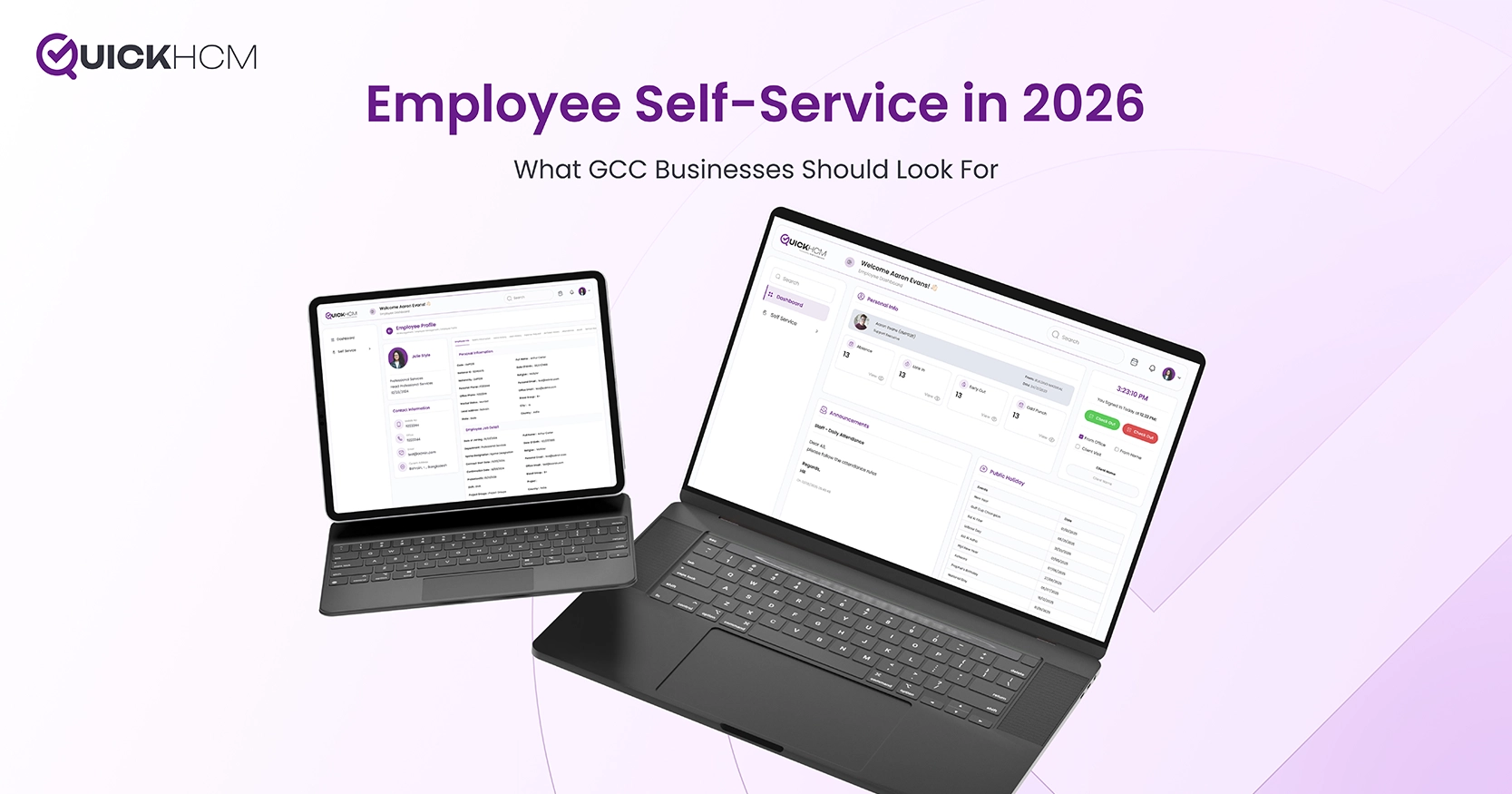
In 2026, Employee Self Service is no longer a convenience feature. It is a core expectation of modern workforce management. Across Bahrain and the wider GCC region, organizations are moving toward digital-first HR environments where employees manage their own information, requests, and records within secure, structured platforms.
Traditional HR departments once handled every update manually, from address changes to leave applications. Today, this model is inefficient and unsustainable. As organizations adopt human capital management software, Employee Self Service becomes a foundational component of operational efficiency and workforce transparency.
For GCC businesses, especially those undergoing digital HCM transformation, choosing the right Employee Self Service capability within a broader cloud HCM platform GCC environment is critical for long-term success.
What Is Employee Self Service in a Modern HCM System?
Employee Self Service refers to a digital interface within an HCM platform that allows employees to access, update, and manage permitted HR-related information independently.
In a modern employee self-service HCM environment, employees can:
- View and update personal information
- Access pay slips and payroll records
- Submit leave and attendance requests
- Download HR documents
- Track performance and feedback records
When integrated into a core HR software GCC framework, Employee Self Service improves accuracy, reduces HR administrative workload, and enhances transparency across the organization.
Why Employee Self Service Matters More in 2026
Workforces across Bahrain and the GCC are becoming increasingly distributed. Hybrid models, remote teams, and multi-location operations demand digital accessibility.
Employee Self Service supports:
- Reduced dependency on HR for routine updates
- Faster internal communication
- Improved data accuracy
- Greater employee engagement
Organizations using self-service HR software solutions benefit from lower administrative overhead while strengthening compliance and governance. As HR teams adopt HR automation software GCC, Employee Self Service becomes central to improving workforce efficiency.
Key Features to Look for in Employee Self Service Software in 2026
1. Seamless Integration with Core HR Systems
Employee Self Service must be tightly integrated with employee records and payroll systems. Standalone portals create inconsistencies and duplication.
Look for solutions that integrate with:
- Payroll software platforms
- Time and attendance HCM tools
- HR records management system modules
Integration ensures consistency across the HR and payroll system ecosystem.
2. Cloud-Based Accessibility and Scalability
Modern Employee Self Service must operate within a cloud-based HR platform to support remote teams and multi-location access.
A strong cloud HRIS system GCC enables:
- Secure remote access
- Scalability for growing teams
- Reduced infrastructure overhead
This is essential for organizations seeking scalable HCM software GCC solutions.
3. Secure and GCC-Compliant Architecture
Employee data is sensitive. A robust GCC compliant HCM system ensures data protection, audit trails, and role-based permissions.
Security features should include:
- Role-based access controls
- Audit logs
- Encrypted data storage
This supports broader HR compliance software GCC requirements.
4. Multilingual User Interface
GCC businesses often operate with diverse workforces. An Arabic-English HCM system improves accessibility and adoption.
Multilingual support ensures:
- Better employee experience
- Higher engagement
- Inclusive workforce communication
5. Self-Service Leave and Attendance Management
In 2026, employees expect digital workflows for leave, attendance, and scheduling.
An integrated Employee Self Service portal should connect with:
- Workforce management software GCC
- Workforce scheduling software
- Attendance tracking modules
This enhances operational efficiency while supporting accurate payroll processing.
6. Performance and Feedback Visibility
Modern Employee Self Service should extend beyond administrative tasks. It should integrate with hcm with performance tracking and performance review HCM tools.
Employees should be able to:
- View performance objectives
- Access feedback history
- Track development milestones
When aligned with employee engagement software GCC, this strengthens workforce motivation and accountability.
How Employee Self Service Supports Digital HCM Transformation
Employee Self Service is a cornerstone of digital HCM transformation. It reduces manual HR intervention while empowering employees with controlled autonomy.
Benefits include:
- Faster onboarding through integrated workflows
- Reduced HR email and paperwork
- Better workforce data accuracy
- Improved employee satisfaction
For businesses adopting online HR software or transitioning to an HR cloud solution, Employee Self Service is a strategic investment rather than an optional add-on.
What QuickHCM Offers for Employee Self Service
QuickHCM provides a robust Employee Self Service module as part of its HR management software Bahrain offering.
QuickHCM enables employees to securely manage personal information, access payroll data, and interact with HR workflows within a centralized platform.
Key Capabilities of QuickHCM Employee Self Service
- Secure employee profile access
- Leave and attendance request management
- Payroll slip visibility integrated with payroll system for GCC companies
- Multilingual accessibility via the Arabic-English HCM system
- Integration with document management and HR records
- Mobile-ready interface for distributed teams
As part of a broader integrated HR software GCC ecosystem, QuickHCM ensures employee information flows seamlessly across payroll, workforce, and analytics modules.
Why GCC Businesses Choose Integrated Self Service Over Standalone Tools
Standalone portals create fragmentation. When Employee Self Service is disconnected from core HR systems, inconsistencies arise.
An integrated approach ensures:
- Data accuracy across modules
- Unified reporting via HR analytics software GCC
- Stronger compliance alignment
- Reduced system duplication
This is particularly important for industries such as construction and healthcare where compliance and workforce scale matter, including HCM for construction companies in the GCC and HCM for healthcare industry GCC deployments.
Choosing the Right Employee Self Service Software in 2026
When evaluating Employee Self Service solutions, GCC businesses should assess:
- Integration depth within a cloud-based HR management system GCC
- Compliance readiness and governance controls
- Scalability for future workforce growth
- Alignment with payroll and workforce systems
- Long-term digital transformation compatibility
The right HCM platform businesses choose should support both operational efficiency and strategic workforce visibility.
Conclusion
In 2026, Employee Self Service is no longer optional for GCC businesses. It is a foundational capability within modern human capital management software that drives efficiency, transparency, and workforce empowerment. Organizations that invest in integrated, scalable, and secure Employee Self Service solutions strengthen both operational control and employee engagement.
With its GCC-ready architecture and integrated ecosystem, QuickHCM provides a future-ready Employee Self Service solution designed to support digital HR transformation across Bahrain and the wider region.
If your organization is ready to modernize HR operations and empower employees with secure digital access, QuickHCM can help.
Questions About Employee Self Service
Employee Self Service is a digital portal within an HCM platform that allows employees to securely access and manage approved HR information such as personal details, leave requests, and payroll records. It reduces dependency on HR teams for routine updates. By centralizing these interactions, it improves efficiency, transparency, and data accuracy across the organization.
GCC businesses often manage diverse, multilingual, and distributed workforces. Employee Self Service ensures employees can access HR services anytime through a secure digital platform. This supports compliance, operational efficiency, and improved workforce engagement while aligning with regional digital transformation initiatives.
When employees update their own personal information within structured workflows, errors caused by manual data entry are significantly reduced. Integrated systems automatically synchronize changes across payroll, attendance, and workforce modules. This ensures consistent and reliable employee records throughout the HR ecosystem.
Yes. Modern Employee Self Service platforms use role-based access controls, encryption, and audit trails to protect sensitive employee data. When implemented within a GCC compliant HCM system, it supports regulatory alignment and strengthens governance across HR operations.
Cloud-based Employee Self Service systems are built to scale with workforce expansion and multi-location operations. As organizations grow, the platform can support additional users, departments, and workflows without compromising performance or security.