Employee engagement has become one of the most critical priorities for modern organizations. In today’s competitive and fast-changing work environment, disengaged employees don’t just impact morale, they directly affect productivity, retention, and business performance. Research consistently shows that organizations with highly engaged employees outperform their peers in profitability, innovation, and customer satisfaction.
For HR leaders, improving engagement is no longer about isolated initiatives like surveys or team events. It requires strategic planning, long-term thinking, and alignment between people, processes, and business goals. This article explores how HR leaders can improve employee engagement through structured, data-driven, and people-centric strategic planning and why this approach delivers sustainable results.
Why Employee Engagement Is a Strategic Priority
Employee engagement reflects how emotionally committed employees are to their work and the organization. Engaged employees are more motivated, productive, and aligned with organizational objectives.
According to global workforce studies:
- Highly engaged teams show up to 21% higher productivity
- Organizations with strong engagement experience lower absenteeism and turnover
- Disengagement costs businesses billions annually due to lost performance and rehiring expenses
These figures highlight a critical truth: engagement is not an HR metric; it’s a business metric.
The Role of Strategic Planning in Employee Engagement
Strategic planning allows HR leaders to move from reactive engagement efforts to intentional, sustainable workforce strategies.
Instead of asking:
- “How do we boost engagement this quarter?”
Strategic HR leaders ask:
- “How do we design a work environment where engagement is built into everyday operations?”
Strategic planning connects engagement initiatives with:
- Organizational vision and values
- Leadership behaviors
- Workforce structure and roles
- Performance management and development

1. Aligning Engagement Goals with Business Strategy
One of the most common mistakes organizations make is treating employee engagement as a standalone HR initiative. Engagement strategies are far more effective when they are directly aligned with business objectives.
HR leaders should:
- Translate business goals into people-focused outcomes
- Identify how engagement supports productivity, innovation, and customer experience
- Define engagement KPIs that reflect organizational priorities
For example, if a company’s strategy focuses on innovation, engagement planning should emphasize collaboration, learning, and psychological safety. Employees understand how their work contributes to larger goals, increasing purpose and motivation.
2. Using Workforce Data to Inform Engagement Planning
Data-driven HR planning plays a crucial role in improving engagement. Rather than relying on assumptions, HR leaders can leverage workforce insights to identify real engagement drivers.
Strategic planning should incorporate:
- Engagement survey trends over time
- Performance and feedback data
- Absenteeism and turnover patterns
- Role-specific engagement challenges
Organizations that use HR analytics for workforce planning report more targeted engagement initiatives and better leadership decision-making. Data allows HR leaders to shift from generic engagement programs to personalized, impactful strategies.
3. Strengthening Leadership Capability and Accountability
Employee engagement is heavily influenced by leadership behavior. Studies show that managers account for a significant portion of engagement variance within teams.
Strategic HR planning must therefore include:
- Leadership development frameworks
- Clear expectations for people management
- Coaching and feedback mechanisms for managers

HR leaders should ensure that people leadership is treated as a core leadership competency, not a soft skill. When managers are equipped to communicate effectively, recognize performance, and support development, engagement improves organically.
4. Designing Clear Career Paths and Development Plans
One of the strongest drivers of employee engagement is growth opportunity. Employees who see a future within the organization are more committed and motivated.
Strategic planning should focus on:
- Transparent career pathways
- Skills development and upskilling initiatives
- Regular performance and development conversations
Research shows that employees who feel supported in their career development are significantly more likely to remain engaged and loyal. Strategic workforce planning ensures development initiatives align with both employee aspirations and future organizational needs.
5. Building a Culture of Continuous Feedback and Communication
Engagement thrives in environments where employees feel heard and valued. Annual engagement surveys alone are no longer sufficient.
HR leaders should strategically plan for:
- Ongoing feedback mechanisms
- Regular check-ins between managers and employees
- Open communication channels across teams
A culture of continuous feedback builds trust, strengthens relationships, and allows organizations to address engagement issues before they escalate.
Key Benefits of Strategic Engagement Planning
When HR leaders approach engagement through structured planning, organizations experience measurable benefits:
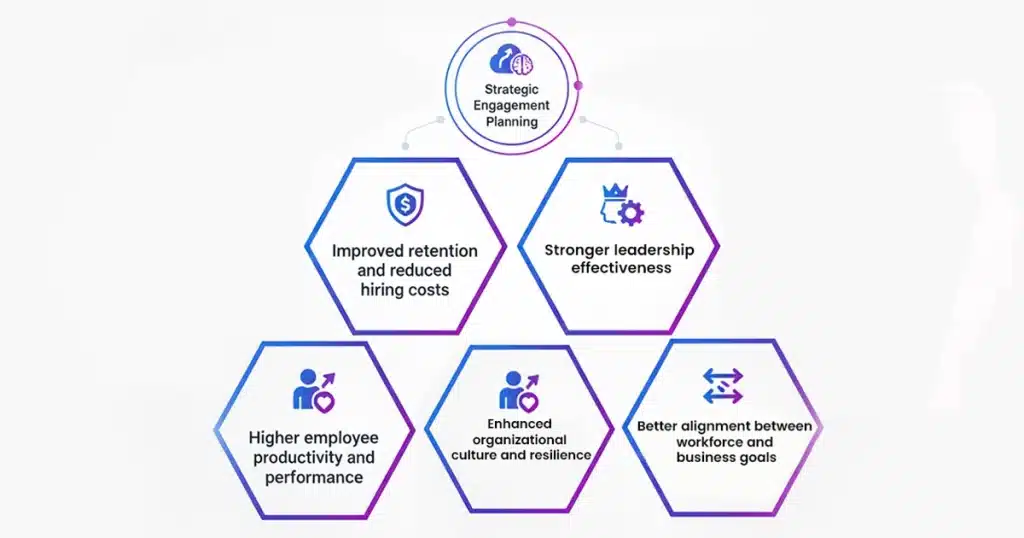
Strategic engagement planning transforms engagement from a reactive HR function into a long-term organizational advantage.
Common Challenges HR Leaders Face
Despite its importance, improving employee engagement through strategic planning comes with several challenges. Understanding these hurdles allows HR leaders to proactively address them and maximize the impact of their initiatives.
1. Lack of Leadership Alignment
Engagement strategies require active support from leadership to succeed. Without leadership buy-in, programs often fail to gain credibility, resources, or organizational visibility. For example, if managers do not model desired behaviors like recognizing employees or encouraging feedback, engagement efforts may appear superficial and fail to inspire staff.
Solution: Align engagement objectives with executive priorities, involve leaders early in planning, and hold managers accountable for engagement outcomes.
2. One-Size-Fits-All Approaches
Generic engagement initiatives rarely meet the needs of a diverse workforce. Different teams may have varying motivations, work styles, and challenges. For instance, remote teams might prioritize flexible work policies, while frontline employees may value recognition and career development.
Solution: Segment employees based on roles, geography, or experience levels, and design targeted engagement programs that address the specific needs of each group.
3. Insufficient Data Utilization
Many organizations collect engagement data through surveys or performance metrics but fail to use it effectively. This can lead to reactive interventions instead of proactive, strategic planning. Without proper analysis, HR leaders may miss early warning signs of disengagement or turnover.
Solution: Leverage workforce analytics to identify trends, predict risks, and measure the effectiveness of engagement initiatives. Integrating HR analytics software or employee feedback solutions can help turn raw data into actionable insights.
4. Change Resistance
Cultural and behavioral change is often slow. Employees and managers may resist new engagement programs or policies, especially if they feel additional responsibilities or monitoring are imposed without clear benefits.
Solution: Communicate the purpose, benefits, and expected outcomes of engagement initiatives clearly. Use phased implementation, training, and feedback loops to build trust and buy-in over time.
5. Limited Resources and Budget Constraints
HR teams frequently face limited resources to implement large-scale engagement initiatives, particularly in small-to-medium enterprises (SMEs). High-quality programs like leadership training, learning and development, or recognition platforms often require investment.
Solution: Prioritize high-impact initiatives and leverage cost-effective tools like digital HR platforms that enable employee engagement, self-service, and analytics in a single solution.
6. Balancing Short-Term Wins with Long-Term Strategy
HR leaders may feel pressure to show immediate engagement improvements, such as higher survey scores, but short-term fixes rarely sustain long-term engagement. Focusing solely on quick wins can undermine strategic planning.
Solution: Develop a clear strategic engagement roadmap with short-term milestones that feed into long-term workforce goals, balancing immediate impact with sustainable results.
Addressing these challenges requires a combination of patience, leadership commitment, strategic vision, and effective use of HR technology. By proactively tackling these obstacles, HR leaders can transform engagement from a set of programs into a sustainable organizational advantage.
How Strategic Planning Creates Sustainable Engagement
Sustainable engagement is not achieved through isolated initiatives; it is built through:
- Intentional workforce design
- Strong leadership behaviors
- Data-informed decision-making
- Continuous alignment between people and purpose
When engagement becomes embedded in HR strategy, it evolves into a self-reinforcing system that supports both employees and organizational success.
Conclusion
Employee engagement is no longer a “nice-to-have” initiative; it is a strategic leadership responsibility. HR leaders who invest in thoughtful planning, data-driven insights, and leadership development create environments where engagement thrives naturally.
By aligning engagement with business strategy, empowering managers, and continuously listening to the workforce, organizations can unlock higher productivity, stronger retention, and long-term performance.
In a world where talent is a key competitive advantage, strategic employee engagement planning is one of the most powerful tools HR leaders have. Are you ready to strengthen your employee engagement strategy? Modern HR leaders need the right tools and insights to support strategic workforce planning and engagement initiatives.
Explore how QuickHCM supports data-driven HR planning, performance management, and employee engagement by booking a personalized demo.
FAQs
Employee engagement in HR strategy refers to the planned, long-term approach HR leaders use to align employee motivation, commitment, and performance with organizational goals through leadership, communication, development, and workforce planning.
HR leaders can measure engagement through surveys, performance data, absenteeism trends, feedback systems, and regular employee check-ins to identify patterns and improvement areas.
Common challenges include lack of leadership buy-in, generic engagement programs, poor use of workforce data, and resistance to organizational change.
Yes. HR technology supports engagement by enabling data-driven planning, continuous feedback, performance management, and transparent communication across teams