Streamline Offboarding with Structure, Compliance & Clarity
QuickHCM’s Employee Separation module ensures that every exit—whether voluntary or involuntary—is handled with professionalism, transparency, and full compliance. From resignation to final settlement, manage every step of the offboarding journey with ease.
Key Features
Separation Request Workflow
Employees or managers can initiate resignations, retirements, or termination requests with proper justification and documentation.
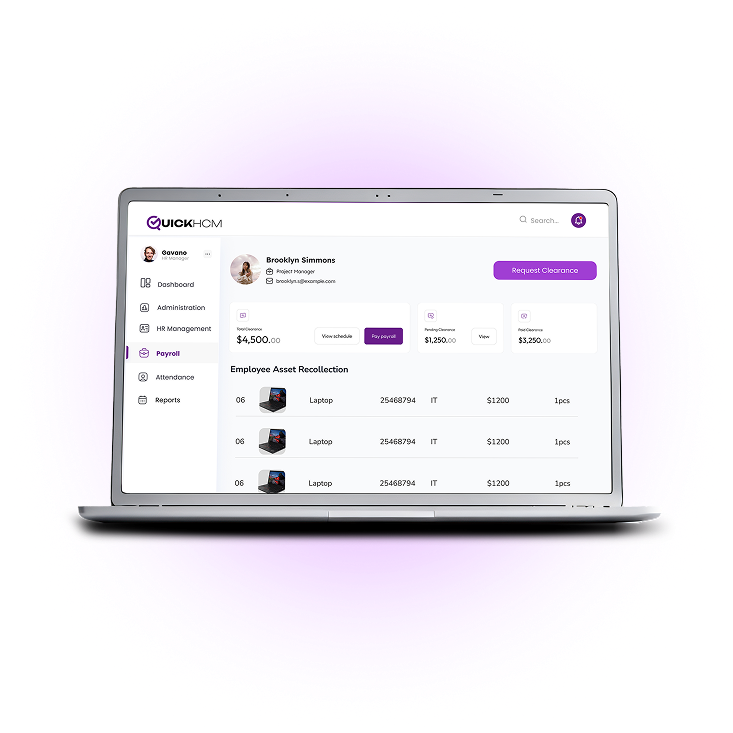
Asset & Document Clearance
Integrates with the Asset Management and Document Management modules to ensure all issued items and sensitive files are returned before exit.
Feedback & Exit Interview Logs
Collect structured feedback from departing employees for retention insights and organizational improvement.
Exit Checklist Automation
Automatically generate custom exit checklists for departments like HR, IT, Finance, and Admin—ensuring all handovers are properly tracked.
Final Settlement Calculations
Automate end-of-service benefit (EOSB) calculations based on tenure, leave balances, last drawn salary, and local labor laws.
Compliance & Record Keeping
Maintain digital records of exit documents, approvals, and settlements for future audits or legal reference.
Business Benefits
- Reduce risks of legal disputes and compliance breaches
- Ensure smoother transitions and zero loose ends
- Maintain a positive brand image even during offboarding
- Gain valuable data on employee turnover and exit patterns
Seamlessly Integrated
- Connects with Payroll, Leave Management, and Asset Management
- Ensures data consistency across HR records and department workflows
- Exit status automatically updates in Employee Information Management
Handle Employee Offboarding with Confidence
With QuickHCM, every separation is managed with care, accuracy, and full accountability—so your team can focus on what’s next.
FAQ's
Q1: What is employee separation management and why is it important?
Employee separation management refers to the process of handling employee exits such as resignations, retirements, or terminations. It includes managing final settlements, documentation, and exit procedures. A structured system ensures that all steps are completed accurately and consistently, reducing operational risks and improving overall efficiency.
Q2: Can employee separation systems support businesses operating in the GCC?
Yes, employee separation systems can support organizations operating across the GCC by aligning exit processes with regional workforce practices. They help maintain structured records, manage employee transitions, and ensure that separation processes are handled consistently across locations.
Q3: How does the system manage final settlements?
Employee separation systems help manage final settlements by calculating employee entitlements such as salary, leave balances, and other adjustments. This ensures that the financial closure process is handled accurately and reduces the need for manual calculations.
Q4: Can the system handle notice periods and related adjustments?
Yes, separation systems can track notice periods and manage related calculations based on company policies. They help ensure that notice requirements are followed and that any necessary adjustments are applied correctly during the final settlement process.
Q5: How does the system manage asset returns during employee exit?
Asset management can be integrated with the separation process to track items assigned to employees. This ensures that all company assets are returned before completing the exit process, reducing the risk of loss and improving accountability.
Q6: What documents are generated during employee separation?
Separation systems can generate essential documents such as exit letters, settlement summaries, and employment certificates. These documents help maintain proper records and ensure that the separation process is completed in a structured manner.
Q7: How does employee separation integrate with other HR functions?
Employee separation systems are connected with payroll, leave, and asset management modules. This integration ensures that all relevant data is available for final settlement and documentation, reducing manual work and improving accuracy.
Q8: How does QuickHCM manage employee separation effectively?
QuickHCM provides a structured platform to manage employee separation from initiation to final settlement. It helps track approvals, manage documentation, and integrate data from multiple HR functions, ensuring a smooth and efficient exit process.
Q9: Can this system support businesses operating in the GCC region?
Yes, modern HR systems are designed to support organizations operating across the GCC. They help manage diverse workforces, standardize HR processes, and ensure consistency across multiple locations. By aligning with regional workforce practices and compliance requirements, such systems enable businesses to operate more efficiently while maintaining structured and reliable HR operations.
Insights & Resources
Stay Ahead with Expert HR Insights
A professional services firm in Manama ran six separate systems
Imagine running a business in Bahrain where a compliance deadline
There is a particular kind of exhaustion that HR managers
A retail group in Riyadh spent eight months evaluating HR
A financial services firm in Bahrain sent a policy update
A regional construction group in Saudi Arabia ran its end-of-year